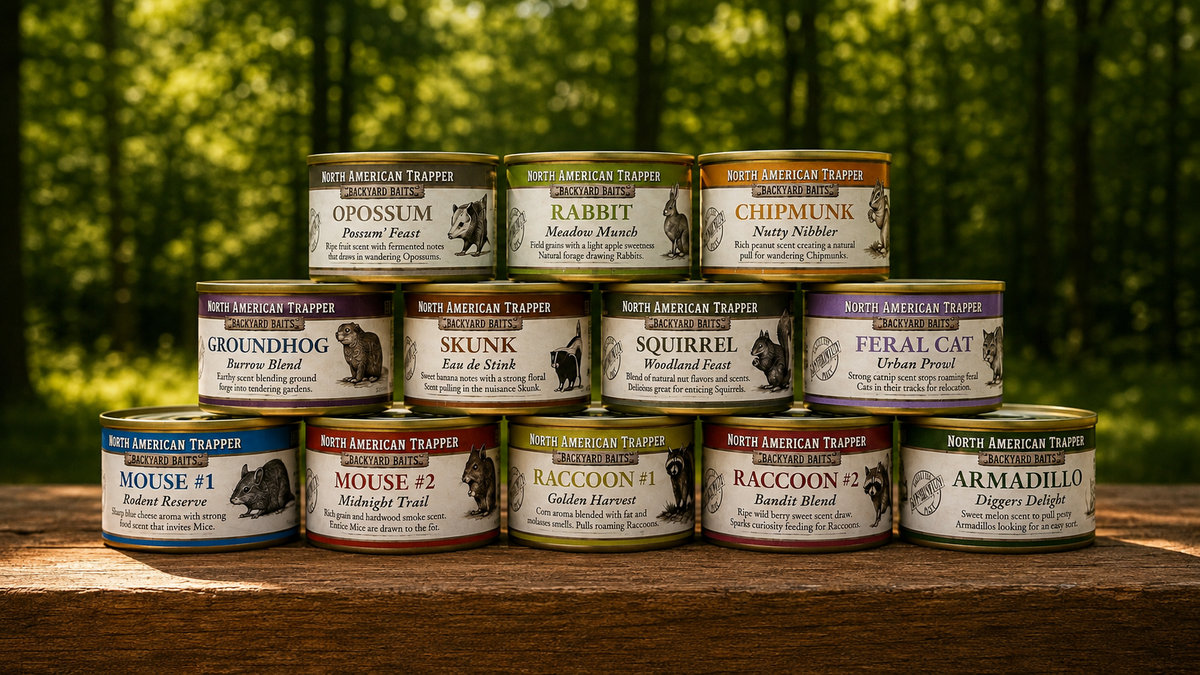
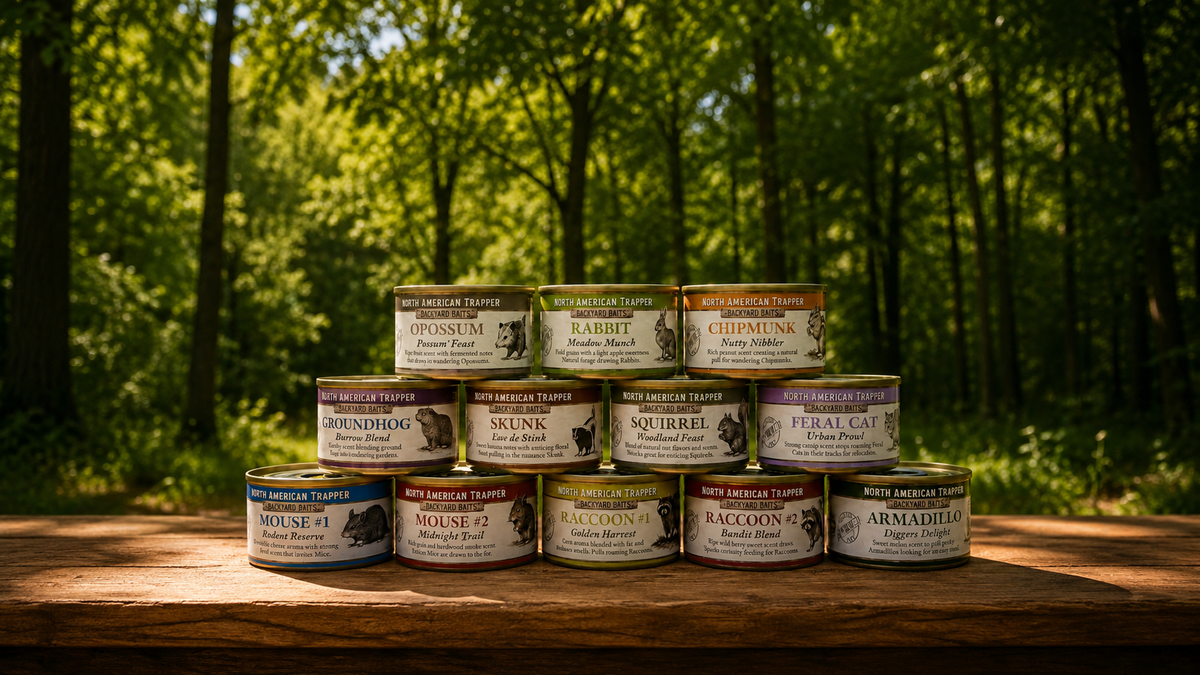
How to Identify and Trap a Groundhog With a Cage Trap and Backyard Baits Groundhog Bait
You walk outside, and there it is again: a large hole in the yard, fresh dirt scattered around the entrance, and maybe a few of your favorite garden plants have disappeared overnight.
If the hole is large enough, you may have a groundhog.
Groundhogs, also called woodchucks, are powerful diggers that can turn a quiet backyard into a construction site. They dig burrows for shelter, raising young, and escaping danger. Those burrows can have multiple entrances.
A typical groundhog burrow entrance can be roughly 10 to 12 inches across, although the size varies depending on the animal and the age of the burrow.
The good news is that if a groundhog is causing problems around your home, garden, shed, or outbuildings, a properly sized cage trap can be an effective way to remove the problem animal.
First, Make Sure It Is a Groundhog
Before you put a trap in the yard, identify what is actually making the hole.
Groundhogs leave some fairly recognizable clues.
Look for a Large Entrance
A groundhog burrow generally has a noticeably large opening compared with holes made by smaller animals.
Look for an entrance approximately 10 inches or more across, often with loose soil or dirt around it.
Groundhog burrows can contain multiple entrances and extend deep underground.
Look for Fresh Dirt
Freshly excavated soil is one of your best clues.
If the dirt is loose, the edges of the hole look freshly dug, and the vegetation around the entrance is disturbed, you may have an active burrow.
However, don’t automatically assume that every hole is a groundhog hole. Smaller holes can be caused by rabbits, rodents, voles, and other wildlife.
The size of the hole, soil mounding, tracks, droppings, and repeated activity can help narrow down the culprit.
Look for Feeding Damage
Groundhogs are primarily plant eaters. Gardens are especially attractive because they provide an easy food source.
Tomatoes, leafy vegetables, garden plants, and other vegetation can all become targets.
An adult groundhog can consume a substantial amount of vegetation every day.
If you’re seeing a large burrow combined with disappearing garden plants, the evidence starts pointing strongly toward a groundhog.
Find the Active Burrow
Once you’ve determined that you’re dealing with a groundhog, don’t immediately start setting traps everywhere.
Take some time to figure out where the animal is actually living and traveling.
Groundhogs generally don’t need to travel great distances from their burrows to find food. A groundhog will often stay within approximately 150 feet of its den.
Look around:
- Under decks
- Around sheds
- Along foundations
- Beneath porches
- Along retaining walls
- Near brush or rock piles
- Around garden edges
- Along the edges of wooded areas
You may find more than one entrance.
Groundhog burrow systems commonly have multiple openings, so don’t assume that the biggest hole is necessarily the only entrance being used.
Watch the Hole
Spend some time observing the area from a distance.
Groundhogs are generally active during daylight hours, particularly in the morning and late afternoon.
If you can determine which entrance the groundhog regularly uses, you have already solved one of the biggest parts of the trapping problem.
Choosing the Right Cage Trap
Groundhogs are considerably larger and stronger than many of the animals homeowners commonly trap around the yard.
Use a sturdy cage trap large enough for the animal.
A trap approximately 10 × 10 × 24 inches or larger is generally needed for groundhogs.
The trap should also be stable.
A groundhog approaching a trap that rocks, wobbles, or has a large gap underneath may decide that something isn’t right.
Set the trap firmly on the ground and make sure it cannot easily move when the groundhog steps inside.
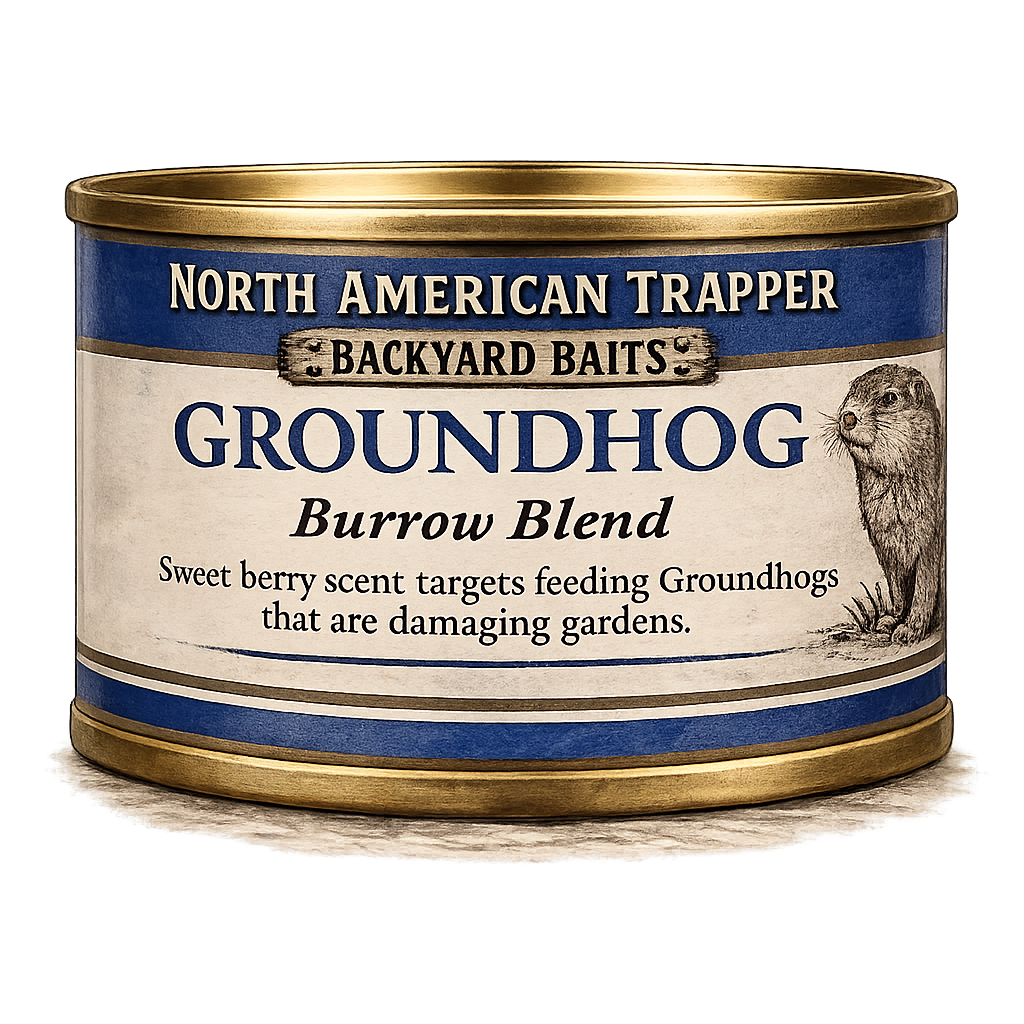
Using Backyard Baits Groundhog Bait
This is where having a bait specifically designed for groundhogs can make the process much easier.
Place Backyard Baits Groundhog Bait toward the back of the cage trap, beyond the trigger mechanism.
The goal is simple:
Make the groundhog enter the trap completely to reach the bait.
Don’t put the bait directly at the entrance.
You want the animal to walk into the trap, commit to entering, and step on the trigger before it reaches the bait.
For additional attraction, you can use the groundhog’s existing feeding habits to your advantage. Common food attractants used for groundhog cage trapping include apples, cantaloupe, cabbage, lettuce, and carrots.
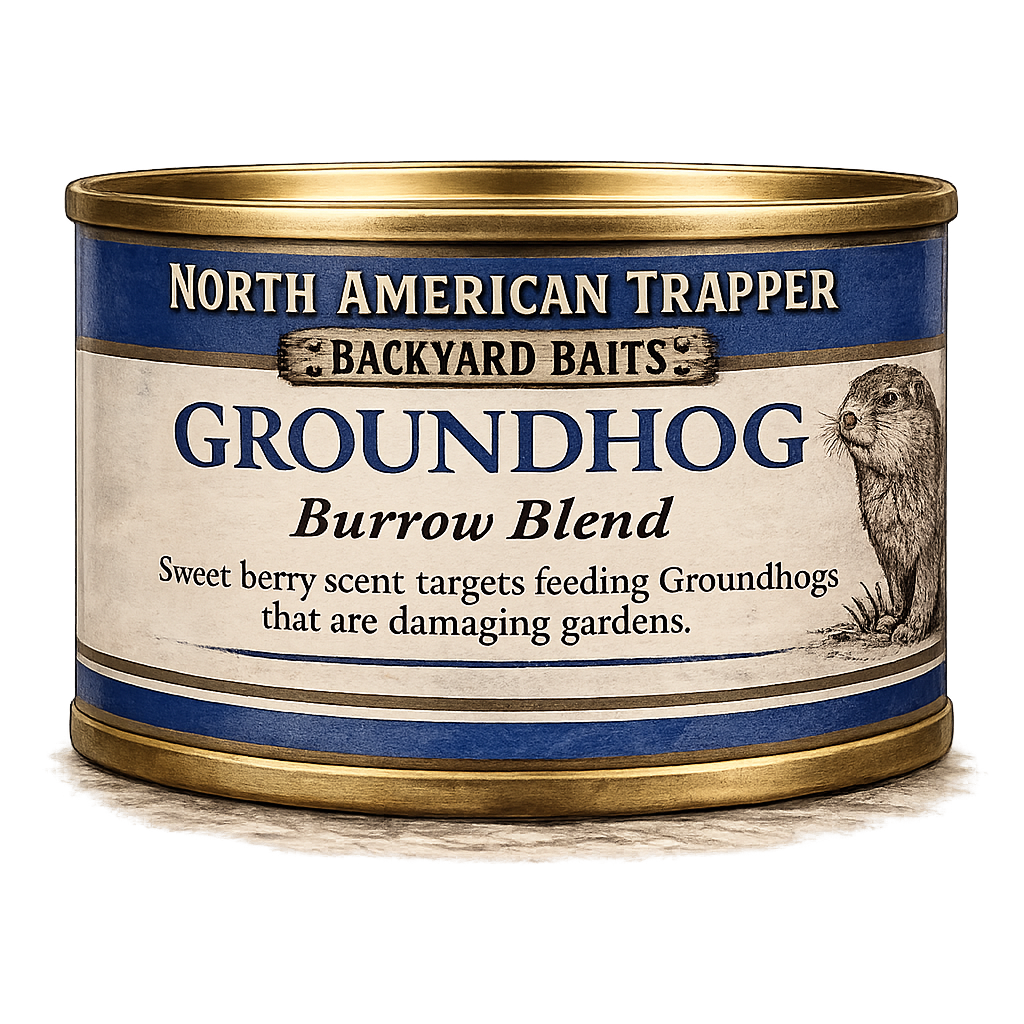
Backyard Baits Groundhog Bait gives homeowners another tool specifically intended for this type of trapping situation.
Where Should You Put the Trap?
This is one of the most important parts of the entire setup.
Put the cage trap where the groundhog already wants to travel.
Don’t put it in the middle of the yard simply because you see the animal feeding there.
Instead, concentrate on the travel route between the burrow and the feeding area.
A good starting point is immediately beside the active burrow entrance—but do not block the entrance with the trap.
Set the trap close enough that the groundhog encounters it naturally as it leaves the den.
If the animal has a well-used trail leading from the den toward the garden, another excellent location is along that travel route.
Make the Trap Look Like It Belongs There
Groundhogs are creatures of habit.
The trap should sit solidly on the ground with no unnecessary gaps underneath it.
Work the trap gently into the soil surface so that it is stable and doesn’t wobble when the groundhog enters.
You don’t necessarily need to completely hide a cage trap. In many situations, placing a properly positioned trap directly in the animal’s normal travel path is more important than using elaborate camouflage.
The less you disturb the area, the better.
A Simple Groundhog Cage-Trapping Setup
Step 1: Identify the Animal
Confirm that the hole, damage, and activity are consistent with a groundhog.
Step 2: Locate the Active Burrow
Look for fresh dirt, a large entrance, and evidence of recent use.
Step 3: Find the Travel Route
Determine where the groundhog travels between its burrow and feeding area.
Step 4: Position the Cage Trap
Place the trap close to the burrow entrance or directly along an established travel route without blocking the den.
Step 5: Stabilize the Trap
Make sure it sits firmly on the ground and doesn’t wobble.
Step 6: Add Backyard Baits Groundhog Bait
Place the bait toward the back of the trap, beyond the trigger, so the animal must enter completely to reach it.
Step 7: Keep the Area Quiet
Avoid excessive disturbance around the trap.
Step 8: Check the Trap Frequently
A live-captured animal should never be left sitting in a cage unnecessarily.
Should You Pre-Bait the Trap?
If the groundhog is trap-shy, pre-baiting can be useful.
Instead of setting the trap immediately, place the bait near or inside the trap while leaving the trap inactive, provided its design allows this to be done safely.
This allows the groundhog to investigate the new object and associate the area with food.
Once the groundhog is comfortable approaching and entering the trap, activate it according to the manufacturer’s instructions.
Not every groundhog needs this step.
If the animal is already feeding aggressively and readily investigating the bait, you may be able to catch it without pre-baiting.
Check Your Trap
Once the trap is set, don’t simply forget about it.
Check it frequently and follow your state’s requirements for monitoring live traps.
It is also a good practice to avoid leaving a cage trap operating overnight when non-target wildlife could enter it.
Many animals may find Backyard Baits products attractive, so an unattended trap could capture an animal you didn’t intend to catch.
Your local regulations may have additional requirements, so check with your state wildlife agency before trapping.
What Do You Do After You Catch the Groundhog?
This is where state and local regulations become especially important.
Don’t assume that because you caught the groundhog legally, you can automatically release it wherever you want.
Relocation rules vary considerably. Some states or municipalities restrict relocation, require permission from the owner of the release property, require permits, or have specific rules regarding how nuisance wildlife may be handled.
Before setting your trap, determine what you’re legally allowed to do with a captured groundhog.
If you intend to relocate a live animal, make sure the release location and method comply with applicable laws and that you have the required permission.
If you are unsure, contact your state wildlife agency or a qualified nuisance-wildlife professional.
Don’t Forget the Burrow
Catching the groundhog solves the immediate animal problem, but it doesn’t necessarily address the reason groundhogs are using your property.
Once you have confirmed that the animal is gone and that no young remain in the burrow, look at why the location is attractive.
Groundhogs commonly establish burrows around structures, sheds, decks, gardens, rock piles, and other areas that provide cover.
After you’re certain the burrow is no longer occupied, consider appropriate exclusion measures.
For gardens, fencing can be extremely effective. Extension recommendations commonly call for fencing approximately three to four feet high, with the lower portion buried to prevent the groundhog from simply digging underneath it.
The Backyard Baits Approach
When you’re trying to solve a backyard wildlife problem, the most important thing is not simply putting a trap somewhere and hoping an animal finds it.
Identify the animal.
Find the signs.
Find the travel route.
Use the right trap.
Use the right bait.
Put the trap where the animal already wants to go.
For a groundhog, that usually means starting with the burrow and working outward toward the animal’s feeding area.
A sturdy cage trap, properly positioned and baited with Backyard Baits Groundhog Bait, gives homeowners a simple, targeted way to deal with a groundhog that has decided the backyard is its new feeding and digging territory.
Remember:
Don’t trap the hole. Trap the groundhog’s habits.
That’s the key to making a catch. Best of luck!
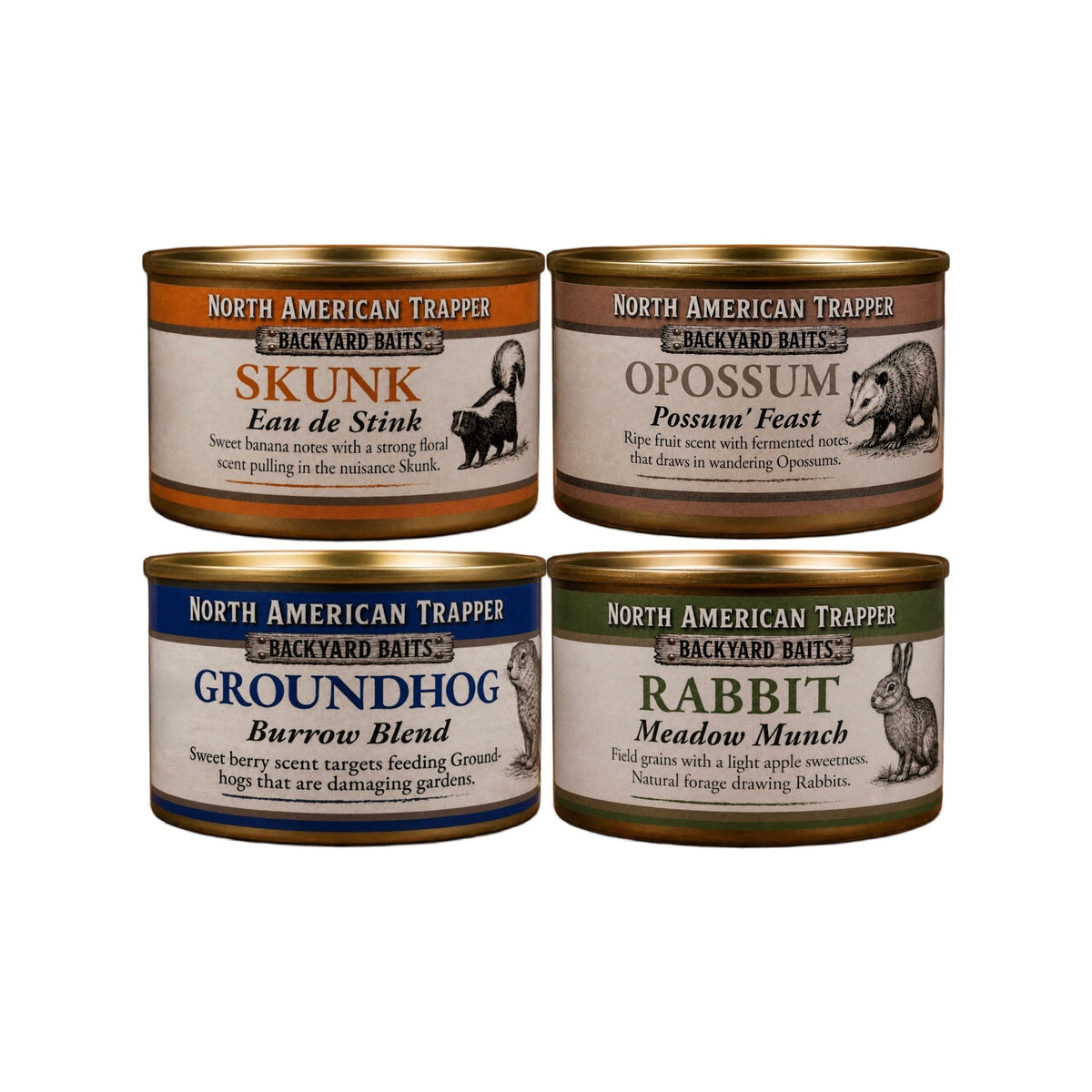
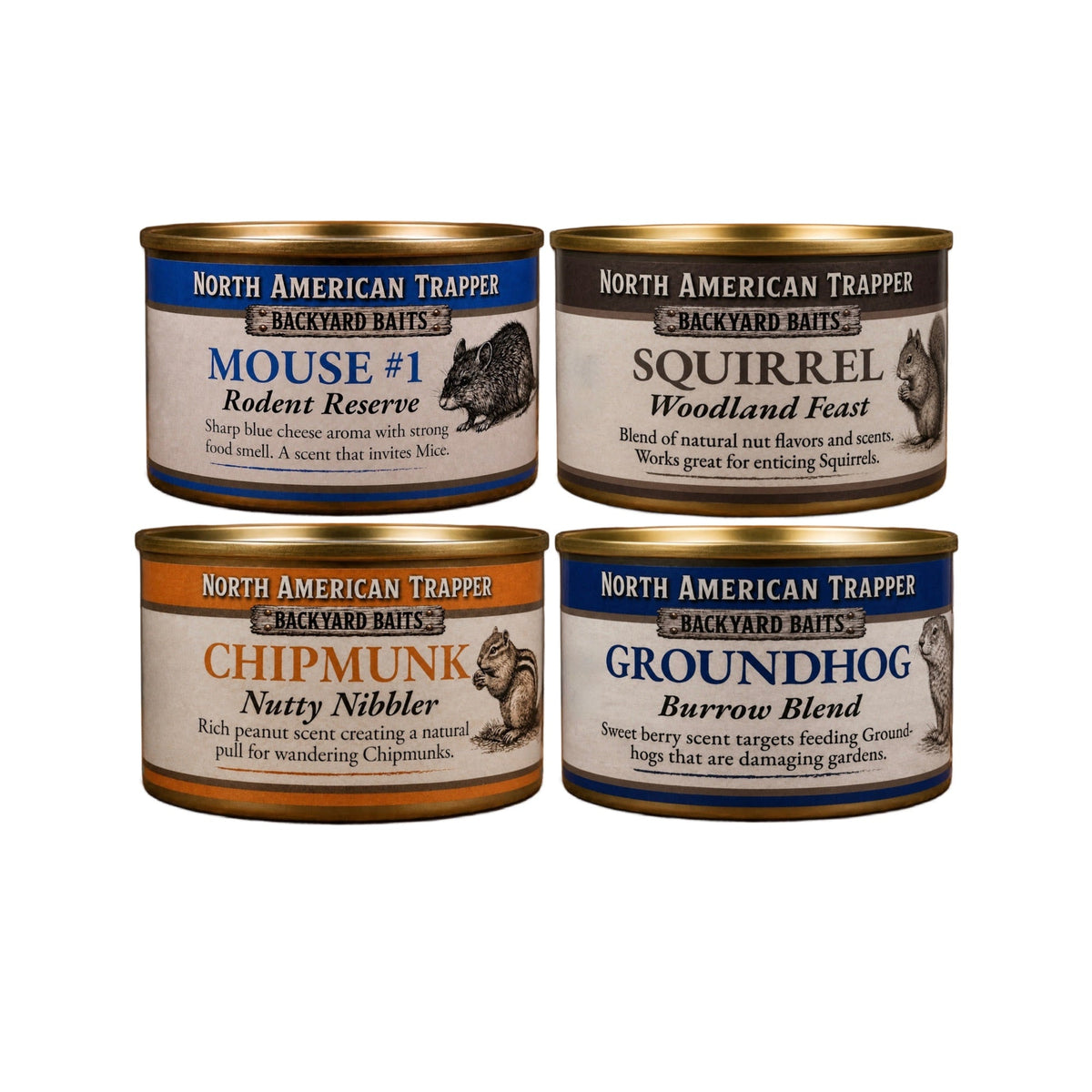
Bait Options