

WHAT IS KILLING MY CHICKENS?
You walk into the coop and find a dead or missing chicken. Feathers are scattered around the yard. Perhaps there is a hole beneath the fence, a damaged section of wire, or an animal has somehow gotten inside.
What killed my chicken?
When poultry is attacked, the first instinct is often to blame the largest predator you can think of. But many different animals can prey on chickens, and the evidence left behind can help identify what happened.
Before setting a trap or choosing an attractant, take a few minutes to investigate.
START WITH THE EVIDENCE
Don't disturb the area any more than necessary before examining it.
Look for:
- Feathers
- Bite or puncture marks
- Wounds
- Missing birds
- Partially eaten carcasses
- Drag marks
- Tracks
- Droppings
- Digging beneath the fence
- Broken or bent wire
- Open doors or damaged latches
- Entry holes
- Signs of climbing
The location and pattern of the attack can be just as important as the condition of the chicken.
COMMON CHICKEN PREDATORS
RACCOONS
Raccoons are capable climbers and can manipulate latches, doors and other openings.
When raccoons get into poultry areas, they may kill or injure multiple birds rather than simply taking one chicken.
Look for:
- Damaged or manipulated doors
- Open or unsecured latches
- Tracks around the coop
- Torn wire
- Evidence of climbing
- Multiple injured or dead birds
FOXES
Foxes are capable predators that may carry chickens away rather than leave the carcass at the attack site.
Look for:
- Missing birds
- Feathers near the point of attack
- Digging beneath fencing
- Small openings
- Tracks around the perimeter
- A disturbed area where the predator entered
A fox may also test fencing and return to an area where it has successfully found food.
COYOTES
Coyotes can kill or carry away poultry and may attack chickens that are allowed to roam outside the secure coop.
Look for:
- Missing birds
- Feathers
- Tracks
- Larger openings in fencing
- Evidence of an animal traveling along the edge of the property
Coyotes may also be attracted by other food sources around the homestead.
SKUNKS
Skunks can prey on eggs and very young poultry and may investigate chicken coops for other food sources.
They can also dig around the outside of a coop while searching for insects and other food.
OPOSSUMS
Opossums are opportunistic feeders and may prey on eggs, young birds or vulnerable poultry.
Look for tracks and other evidence around the coop, particularly if the attack occurred at night.
That's why finding the entry point is critical.
WHERE DID THE ATTACK HAPPEN?
This is one of the most important questions.
INSIDE THE COOP
If the predator got inside, determine exactly how.
Check:
- Doors
- Windows
- Ventilation openings
- Roof areas
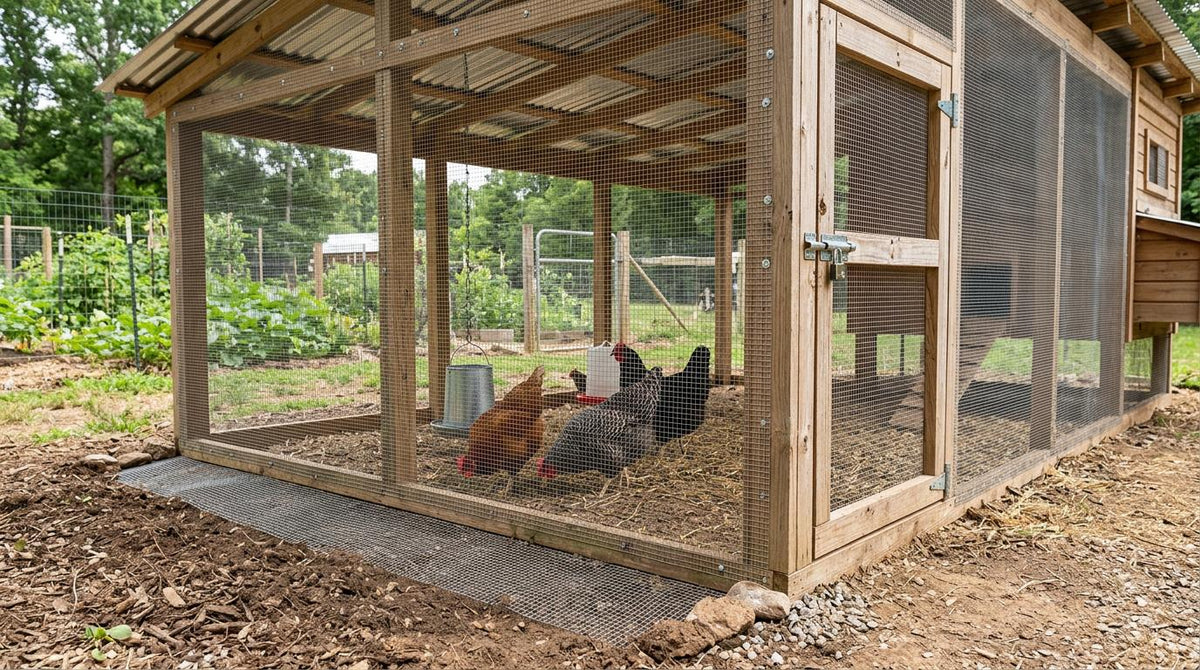
- Wire mesh
- Latches
- Gaps along the foundation
OUTSIDE THE COOP
Look for:
- Fence openings
- Digging
- Tracks
- Drag marks
- Feathers
- Nearby cover
THE ENTRY POINT TELLS A STORY
One of the most valuable clues may be the place where the predator entered.
A hole underneath the fence suggests something different from a broken latch or an opening high above the ground.
Don't repair the hole before documenting it.
Take photographs and measure the opening.
Then inspect the surrounding soil for tracks, hair, feathers or other evidence.
LOOK AT THE FEATHERS
Feathers can help establish where an attack occurred.
Are they:
- Inside the coop?
- Just outside the door?
- Along the fence?
- Spread over a large area?
- In a trail leading away from the coop?
A concentration of feathers can help identify the location where the attack began.
WHAT HAPPENED TO THE CHICKEN?
The condition of the bird can provide additional clues, but appearance alone isn't always enough to identify the predator.
Look for the overall pattern:
WHERE IS THE DAMAGE?
HOW MANY BIRDS ARE AFFECTED?
ARE BIRDS MISSING?
WERE THEY CARRIED AWAY?
IS THERE EVIDENCE OF ENTRY?
WHAT TRACKS ARE PRESENT?
WHAT TIME DID THE ATTACK OCCUR?
The more pieces of evidence you have, the better your chances of correctly identifying the predator.
DON'T FORGET THE EGGS
Sometimes the animal visiting the chicken coop isn't killing chickens at all.
Eggs, feed and poultry scraps can attract wildlife even when the birds themselves are secure.
A predator may first discover the property because of spilled feed, unsecured eggs or other food—and eventually discover the chickens.
That's why the investigation should include everything around the coop, not just the dead or missing bird.
PROTECT THE FLOCK FIRST
If you have an active predator problem, securing the remaining chickens should be the immediate priority.
Check the coop and fencing for openings and weaknesses. Secure doors and latches. Remove spilled feed and other attractants. Keep vulnerable birds enclosed when appropriate.
If you believe a large predator is involved, do not attempt to confront or capture it yourself. Contact the appropriate wildlife-control professional or state/local wildlife agency for guidance.
IDENTIFY BEFORE YOU CONTROL
Backyard Baits® was built around a simple principle:
Understand the animal before attempting to control the problem.
A chicken loss isn't just a dead bird. It's evidence.
The feathers tell part of the story.
The tracks tell part of the story.
The entry point tells part of the story.
The surrounding habitat tells part of the story.
Put those clues together and you can begin to answer the most important question:
Identify the predator. Find the entry point. Secure the remaining flock. Remove the attractants. Then determine the appropriate and legal control method.
Backyard Baits® - Helping homeowners understand the animal before they attempt to solve the problem.