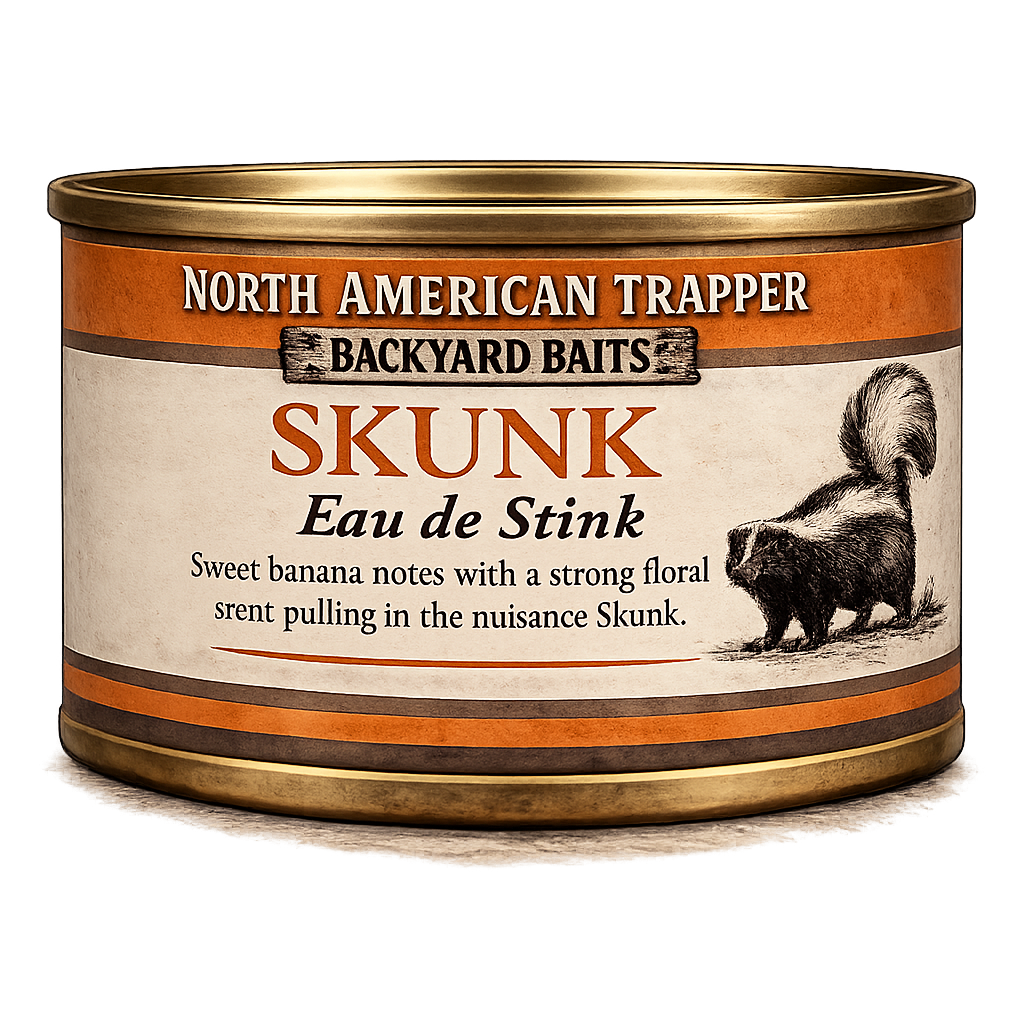
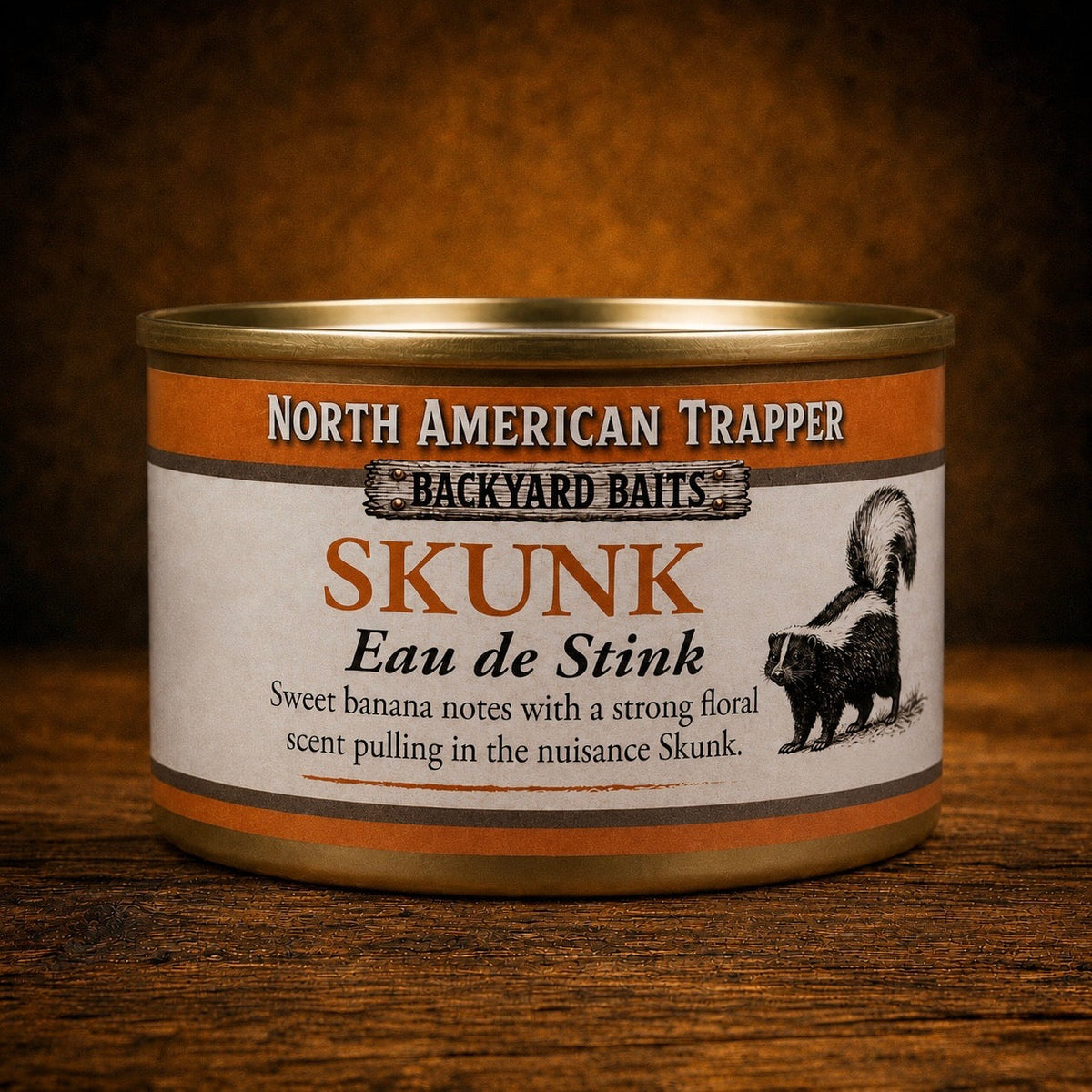
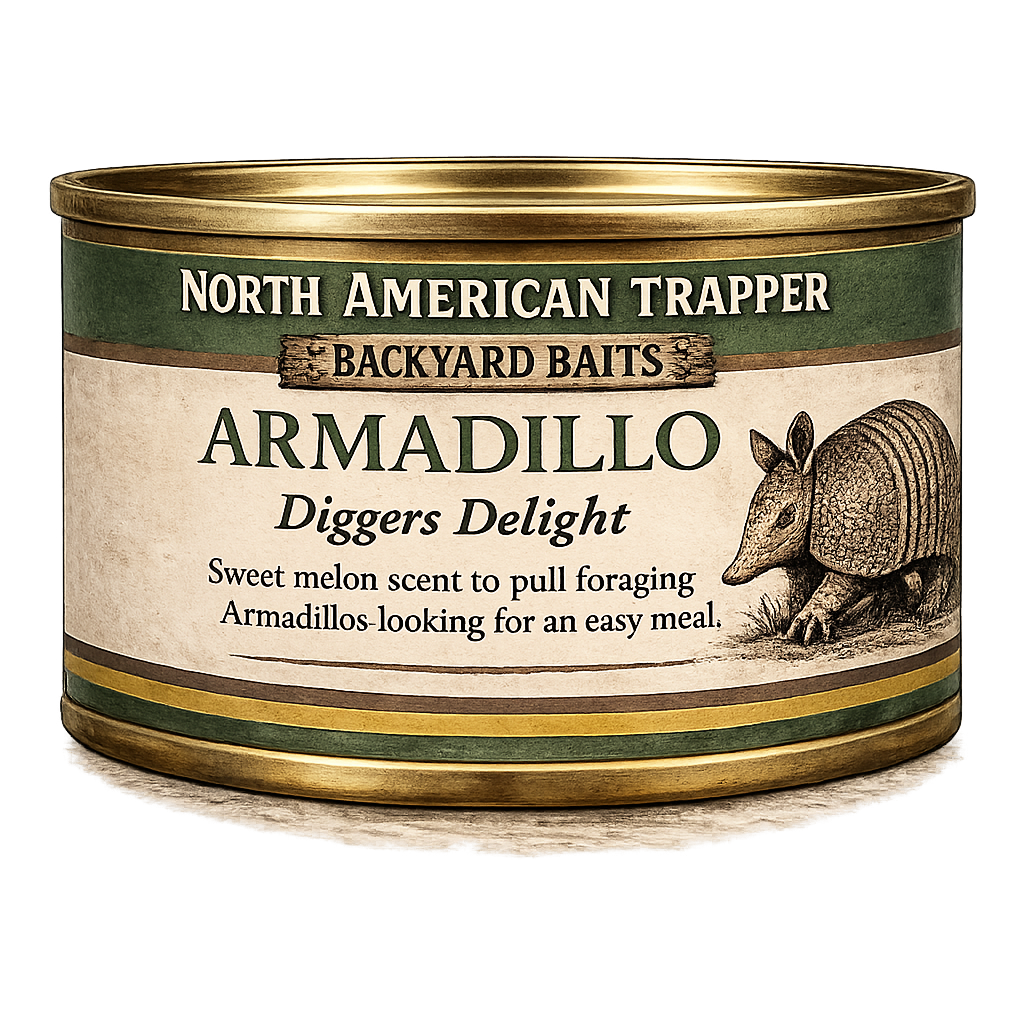
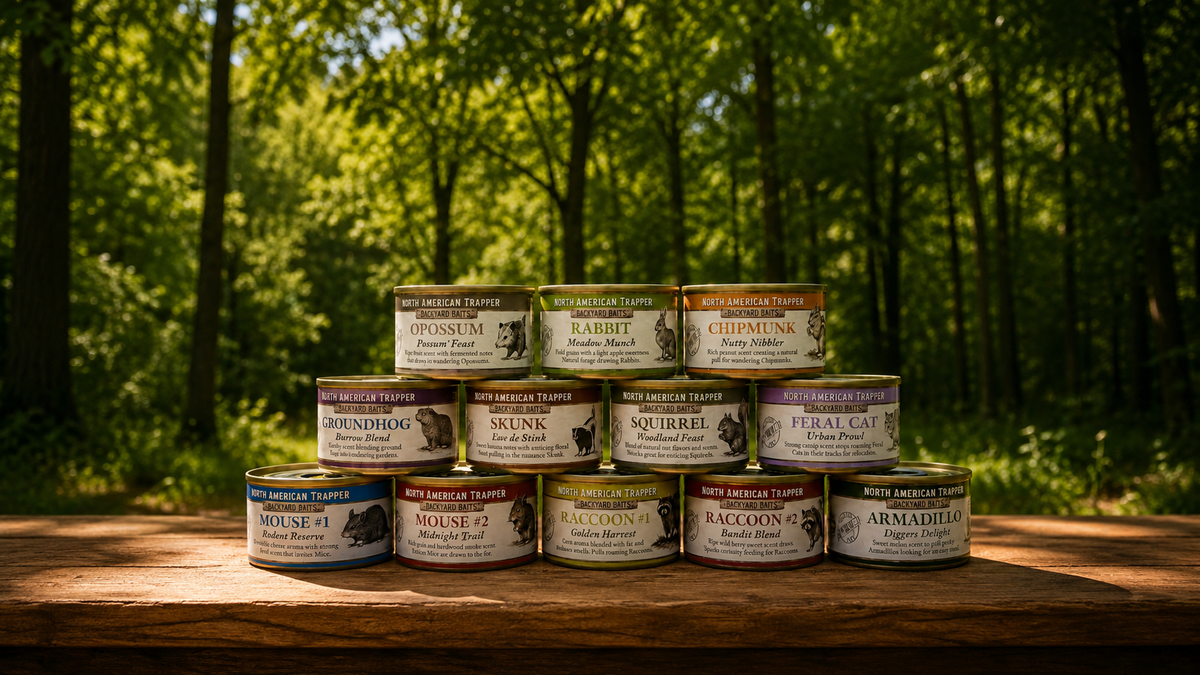
How to Identify and Trap a Skunk With a Cage Trap and Backyard Baits Skunk Bait
You walk outside in the morning and find small holes scattered throughout the lawn.
Fresh dirt.
Torn-up grass.
Maybe the flower bed has been disturbed, or the mulch around your shrubs looks like somebody went through it with a small shovel.
Then you notice another clue.
The damage seems to have happened overnight.
If that sounds familiar, you may have a skunk working in your yard.
Skunks are famous for their smell, but odor isn’t always the first sign that they’re around. In many cases, the first evidence a homeowner sees is a lawn full of small holes.
There’s a good reason for that.
Skunks are accomplished diggers and spend considerable time searching for insects, grubs, and other food beneath the soil.
If a skunk has discovered that your yard is full of easy meals, it may keep coming back night after night.
The key to solving the problem is not chasing the skunk away.
It’s understanding why it’s there, where it’s traveling, and how to intercept it with a cage trap.
First, Make Sure It’s a Skunk
Before you set a trap, identify the animal causing the damage.
Several types of wildlife can dig in a yard, but skunk damage has some recognizable characteristics.
Look for Small, Cone-Shaped Holes
One of the classic signs of skunk activity is a collection of small holes scattered throughout the lawn.
Skunks often dig into the soil while searching for grubs, insects, and other invertebrates.
The holes can look like someone repeatedly poked the ground with a small shovel.
You may see dozens of them spread across an otherwise healthy lawn.
This type of damage is sometimes called “skunk digging” or “skunk grubbing.”
Look for Overturned Sod
Skunks don’t always make neat little holes.
If the soil is soft and food is abundant, they may tear up sections of turf while searching for food.
Look for:
- Small holes
- Torn grass
- Disturbed sod
- Fresh soil
- Turned-over mulch
- Dug-up flower beds
Fresh damage appearing overnight is an important clue.
Check for Tracks
Skunk tracks have five toes on both the front and rear feet.
Look for tracks in soft soil, mud, and damp areas around the property.
If you find five-toed tracks combined with fresh digging, you have a much stronger indication that a skunk is responsible.
And Then There’s the Smell
Of course, sometimes you don’t need tracks or holes.
You simply smell the evidence.
A skunk’s defensive spray is unmistakable.
However, don’t rely on odor alone. A skunk can live and feed around your property without spraying, and the absence of an odor doesn’t mean a skunk isn’t there.
Why Is the Skunk in My Yard?
This is an important question.
The skunk didn’t choose your backyard because it likes your landscaping.
It chose your property because your property is providing something it wants.
Usually, that’s food.
Lawns can contain large numbers of grubs and insects, particularly when soil conditions are favorable.
A skunk can spend much of the night working an area where food is abundant.
Your backyard may essentially be an all-you-can-eat buffet.
Other things can attract skunks as well:
- Pet food
- Garbage
- Compost
- Fallen fruit
- Accessible food scraps
- Insects
- Shelter beneath decks or sheds
Understanding the attraction helps you decide where to put your trap.
Skunks Are Primarily Nocturnal
You may never actually see the animal causing the damage.
That’s because skunks are primarily active after dark.
You go to bed with a clean yard.
You wake up to fresh holes.
That’s typical skunk behavior.
If you’re trying to confirm activity, inspect the property first thing in the morning.
Fresh digging is your best evidence.
You can also look for tracks around the areas where the animal appears to be feeding.
Find the Skunk’s Travel Route
Once you’ve identified the damage, don’t immediately put your trap in the middle of the lawn.
Take a few minutes to figure out how the skunk is getting there.
Look for a route between:
Shelter → Travel Route → Feeding Area
The skunk may be coming from a wooded area, drainage ditch, brush pile, or other protected location and traveling toward the lawn.
Look along:
- Fence lines
- Building edges
- Brush lines
- Wooded edges
- Creeks or drainage areas
- Areas beneath decks
- Routes between cover and feeding areas
Skunks often travel along protected edges.
That’s exactly where you want to intercept one.
Choosing the Right Cage Trap
Use a sturdy cage trap large enough for a skunk.
The trap should allow the animal to enter comfortably and should have a reliable trigger mechanism.
Before setting it, make sure the trap operates properly.
Check the:
- Door
- Trigger
- Spring or closing mechanism
- Floor
- Wire construction
- Stability
The trap should sit firmly on the ground.
A cage that rocks or moves when the skunk approaches can make the animal suspicious.
The Big Rule With Skunks: Don’t Make Them Feel Trapped Before They’re Trapped
This is where trapping a skunk is different from trapping some other backyard animals.
Skunks have a powerful defensive weapon.
You don’t want to unnecessarily frighten or pressure one.
Set the trap in a location where the skunk can approach naturally.
Avoid crowding the trap against objects in a way that makes the animal feel cornered.
Give the skunk a comfortable approach.
Let the bait do the attracting.
Using Backyard Baits Skunk Bait
Place Backyard Baits Skunk Bait toward the back of the cage trap, beyond the trigger.
You want the skunk to walk completely inside the trap before it reaches the bait.
Don’t put the bait directly at the entrance.
The objective is simple:
Make the skunk enter the cage voluntarily.
If desired and appropriate, you can use a small amount of natural material from the surrounding area to help the trap blend into the setting.
However, don’t bury or obstruct the trap.
Keep the entrance visible and easy for the skunk to enter.
Where Should You Put the Trap?
Location is more important than putting out a dozen traps.
If the skunk is digging throughout the lawn, don’t automatically put the trap next to the worst-looking hole.
Instead, look for the route the animal uses to enter the feeding area.
Along a Fence
A fence line can create a natural travel corridor.
Along a Building
Skunks may travel along the edges of sheds, garages, and other structures.
Near a Wooded Edge
If the skunk is coming from nearby cover, intercepting it between the cover and feeding area can be effective.
Near the Den Area
If you’ve identified a likely shelter or den, a trap can be positioned along the skunk’s normal travel route.
Don’t block the den entrance with the trap.
Before attempting to remove an animal from a den, determine whether young animals may be present.
A Simple Skunk Cage-Trapping Setup
Step 1: Identify the Damage
Look for small holes, disturbed sod, and fresh digging.
Step 2: Confirm Skunk Activity
Look for five-toed tracks and nighttime damage.
Step 3: Find the Food Source
Determine whether grubs, insects, garbage, pet food, or another attractant is bringing the skunk into your yard.
Step 4: Find the Travel Route
Look for the path between cover and the feeding area.
Step 5: Select a Sturdy Cage Trap
Choose a properly sized trap with a reliable trigger and closing mechanism.
Step 6: Position the Trap
Place the trap along the skunk’s established travel route.
Step 7: Add Backyard Baits Skunk Bait
Place the bait beyond the trigger so the skunk must enter the cage to reach it.
Step 8: Stabilize the Trap
Make sure the trap is level, stable, and secure.
Step 9: Leave the Area Relatively Undisturbed
Avoid making unnecessary changes around the trap that could make the skunk suspicious.
Step 10: Check the Trap Frequently
Monitor the trap regularly and follow all applicable local trapping and wildlife requirements.
Don’t Put Your Trap in the Middle of the Feeding Area
This is worth repeating.
If your entire lawn is covered with skunk holes, it may be tempting to put the trap directly in the middle of the damage.
But think about what the skunk is doing.
It’s already finding food there.
Instead of making the skunk change its routine, intercept it while it’s traveling toward that food source.
The best trap location is often the road to the buffet, not the buffet itself.
What If the Skunk Won’t Enter?
Don’t immediately change the bait.
Look at the setup.
- Is the trap on the skunk’s travel route?
- Is there another food source that’s easier to access?
- Is the trap unstable?
- Is it sitting in an exposed location?
- Has the area been disturbed too much?
If the skunk continues walking around the trap without entering, move the trap instead of endlessly adding more bait.
Sometimes a trap that’s only a few feet away from the correct travel route is effectively invisible to the animal.
Pre-Baiting Can Help
Some skunks will investigate a cage trap immediately.
Others may take a little more convincing.
If the skunk is avoiding the trap, pre-baiting can help make the cage less suspicious.
Place bait where the skunk can investigate it without activating the trap, provided the trap’s design allows this to be done safely.
Allow the animal to become comfortable approaching the cage.
Once the skunk is regularly visiting the bait, activate the trap according to the manufacturer’s instructions.
Always follow applicable trapping laws and requirements.
Be Careful Around a Captured Skunk
This is the part of skunk trapping that deserves serious attention.
Do not approach a captured skunk unnecessarily.
- Don’t shake the cage
- Don’t poke the animal
- Don’t corner it
- Don’t attempt to handle it
A calm skunk is much less likely to spray than a frightened or agitated skunk.
Keep children and pets away from the trap.
If you have to approach the cage, do so calmly and deliberately.
What Do You Do After You Catch the Skunk?
Know your local wildlife regulations before you set the trap.
Rules concerning trapping, transportation, and relocation vary by state and local jurisdiction.
Some areas restrict relocation or require specific procedures.
Don’t assume you can simply put the cage in your vehicle and release the skunk somewhere else.
Determine what the law allows before trapping.
If you are uncertain about handling a captured skunk, contact your state wildlife agency or a qualified nuisance-wildlife professional.
Don’t Forget the Reason the Skunk Came
Catching the skunk solves the immediate problem.
However, if your property remains attractive, another skunk may eventually find the same buffet.
After the animal has been dealt with, inspect the property and take the following steps:
- Secure garbage
- Bring pet food indoors
- Secure compost
- Clean up fallen fruit
- Reduce unnecessary food sources
If the animal has been using a crawl space, deck, shed, or other structure, inspect the area for openings. Address them only after you’re certain no wildlife or dependent young remain inside.
For lawns repeatedly damaged by skunks searching for grubs, addressing the underlying lawn and insect conditions can also be part of a long-term solution.
The Backyard Baits Approach
A backyard wildlife problem doesn’t have to become a guessing game.
Start with the signs.
Figure out what animal made them.
Then figure out what the animal wants.
For a skunk, that often means an easy meal of insects and grubs combined with a safe route between its shelter and feeding area.
Once you understand that pattern, the trapping setup becomes much simpler.
A sturdy cage trap, positioned along the skunk’s travel route and baited with Backyard Baits Skunk Bait, gives homeowners a practical way to target the animal responsible for the damage.
Remember:
Identify the animal.
Read the signs.
Find the food.
Find the route.
Set the trap.
You don’t need to trap the entire backyard.
You just need to intercept the skunk on its way through it.
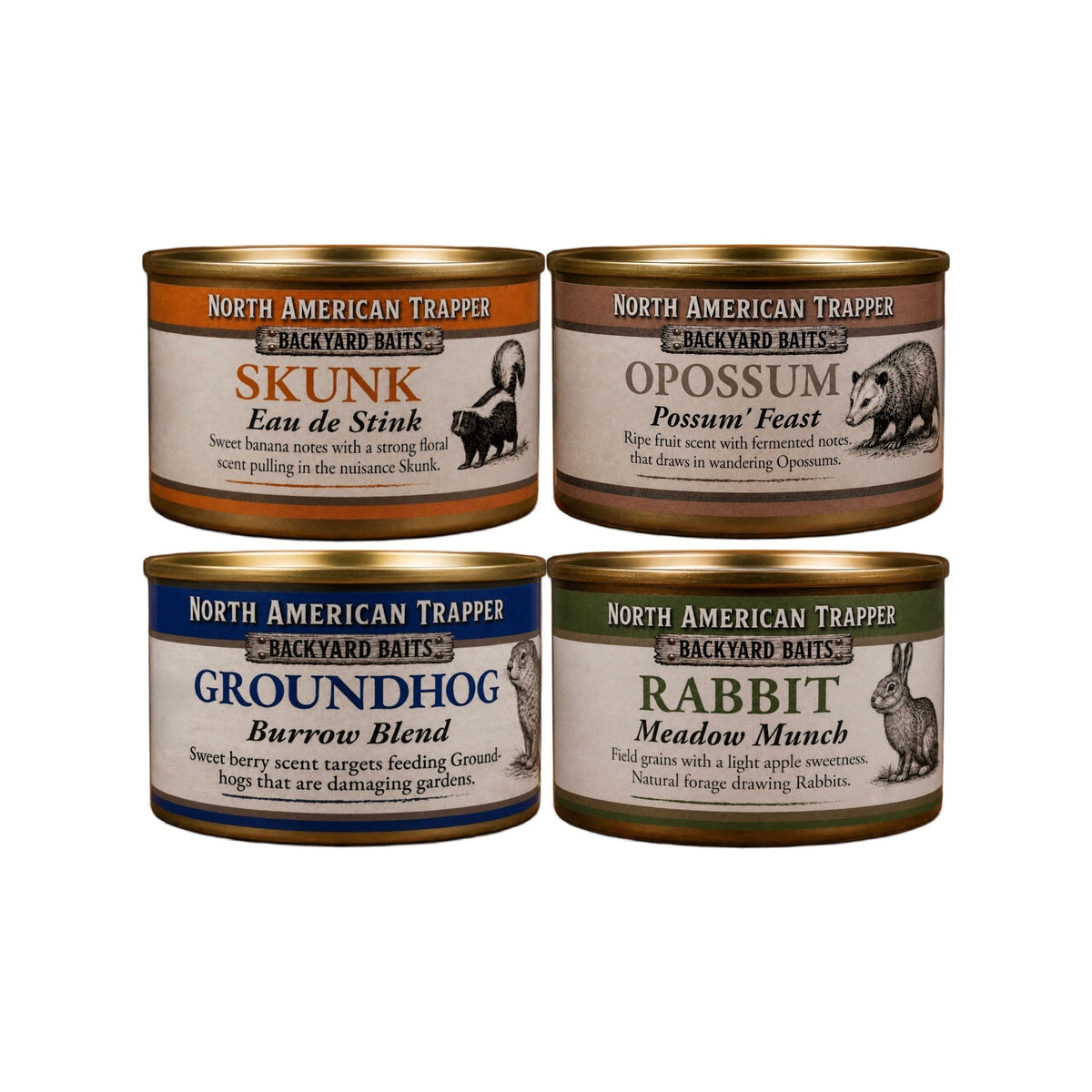
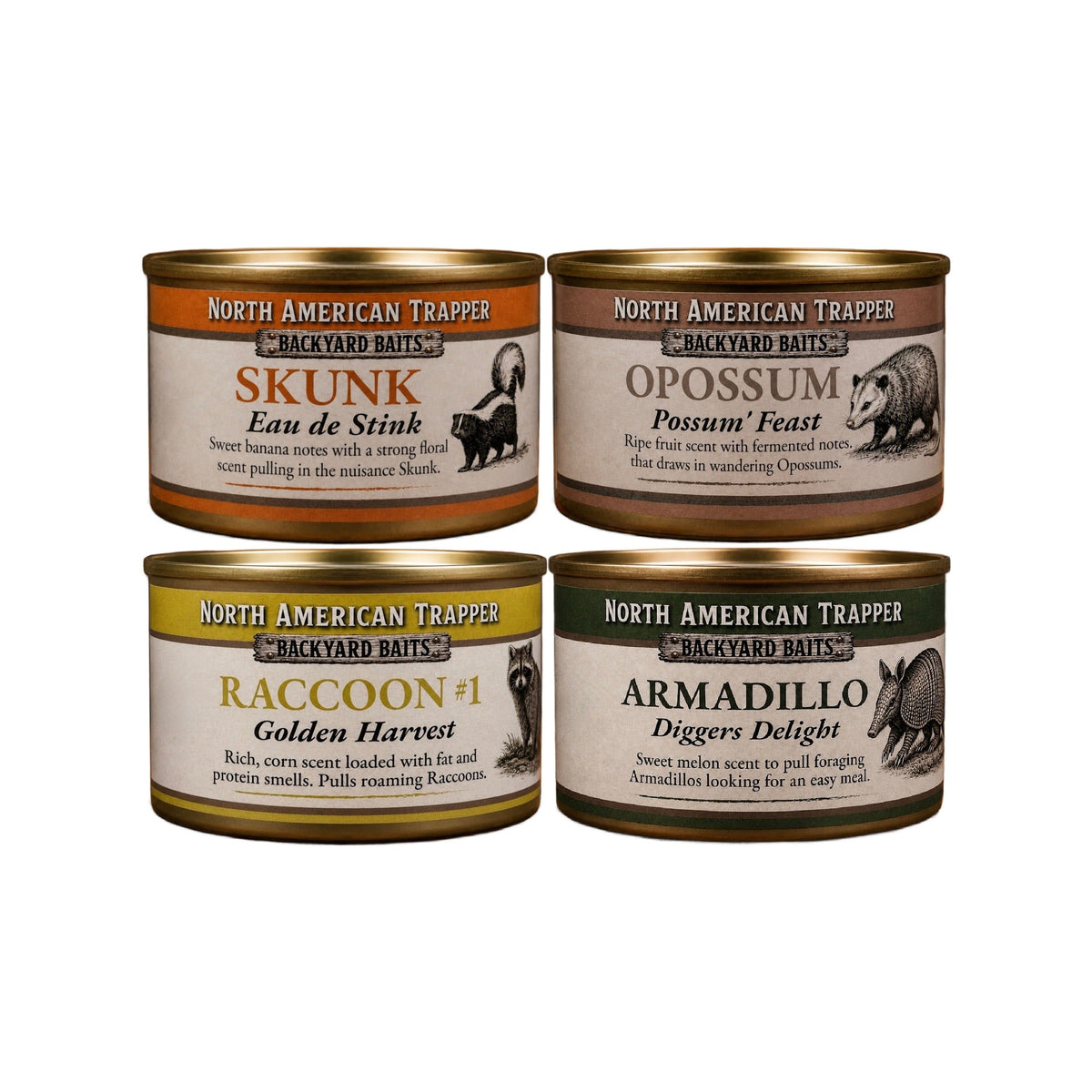
Bait Options