What Is Digging Small Holes in My Backyard? How to Identify and Trap a Chipmunk
If you are finding small holes around your foundation, flower beds, garden, retaining walls, patio, or underneath your deck, you may have a chipmunk problem.
Chipmunks are small, quick, and surprisingly persistent. They spend much of their day moving between food sources and cover. When they find a reliable food supply around your home, they may establish a burrow nearby.
The good news is that chipmunks usually leave plenty of clues.
The key is learning to read those clues, finding where the chipmunk is traveling, and putting your trap directly in its path.
How Do I Know If Chipmunks Are Causing the Damage?
Chipmunk damage is usually much smaller and more localized than the damage caused by a groundhog, armadillo, or other larger digging animal.
Look for:
- Small holes in bare soil, mulch, or flower beds
- Holes along foundations, retaining walls, or rock piles
- Disturbed soil around the entrance to a burrow
- Small amounts of soil pushed away from a hole
- Chewed or missing garden plants
- Seeds, nuts, or bird food disappearing
- Chipmunk droppings around feeding areas
- Activity around decks, sheds, porches, and other protected areas
- Chipmunks darting from cover to cover during daylight hours
One of the biggest clues is the size of the hole.
A chipmunk burrow entrance is generally much smaller than the entrance to a groundhog’s den or that of another larger animal. If the hole is only a couple of inches across and you are seeing small, fast-moving animals nearby, a chipmunk should be high on your list.
Look for the Food Source
Chipmunks are primarily seed and nut eaters, but they are opportunistic feeders.
Around a home, they may take advantage of:
- Bird feeders
- Sunflower seeds
- Corn
- Nuts
- Fallen fruit
- Garden plants
- Pet food
- Vegetable gardens
- Compost
- Food scattered beneath bird feeders
If you have a bird feeder sitting over an area where chipmunks can easily reach the ground, you may be providing an all-you-can-eat buffet.
Before you ever set a trap, look at the area from the chipmunk’s perspective.
Where is the food?
Where is the cover?
Where is the burrow?
Most importantly, how does the chipmunk get from one to the other?
Follow the Travel Route
Chipmunks are small animals, and they prefer to use protected routes whenever possible.
Watch for activity along:
- Foundations
- Stone walls
- Landscaping timbers
- Retaining walls
- Fences
- Shrubs
- Decks
- Porches
- Woodpiles
- Rock piles
- Garden borders
You may see a chipmunk disappear underneath a deck or shrub and then reappear somewhere else.
That is valuable information.
You have just found part of the animal’s travel route.
Don’t automatically put your trap beside the first hole you find.
The better location may be along the route between the chipmunk’s food source and its shelter.
Choose the Right Cage Trap
For chipmunks, use a small cage trap designed specifically for small animals.
The trap should be:
- Properly sized for a chipmunk
- Easy to operate
- Sturdy enough to remain functional outdoors
- Set on a stable surface
- Positioned so the animal can easily approach it
A trap that is excessively large can look intimidating to a small animal.
The goal is to make the trap look like part of the chipmunk’s normal environment rather than an obstacle.
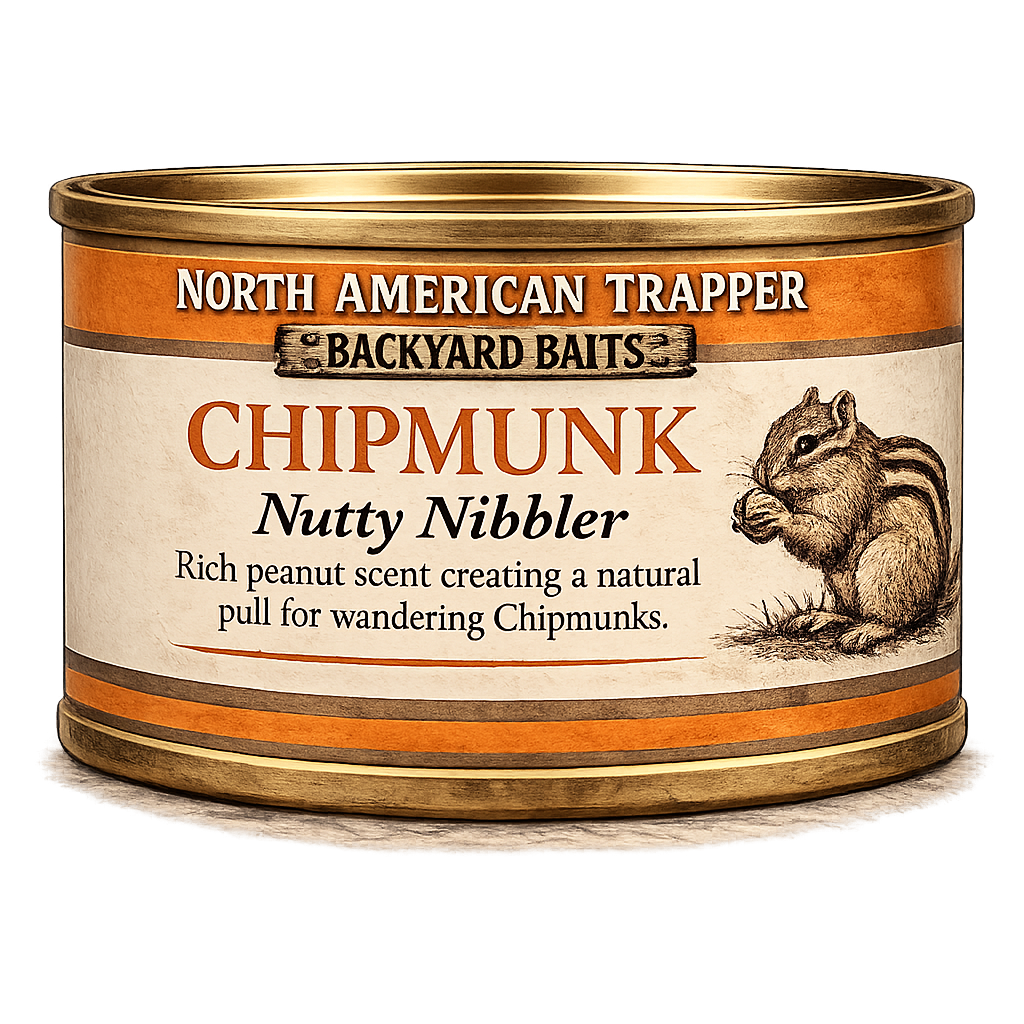
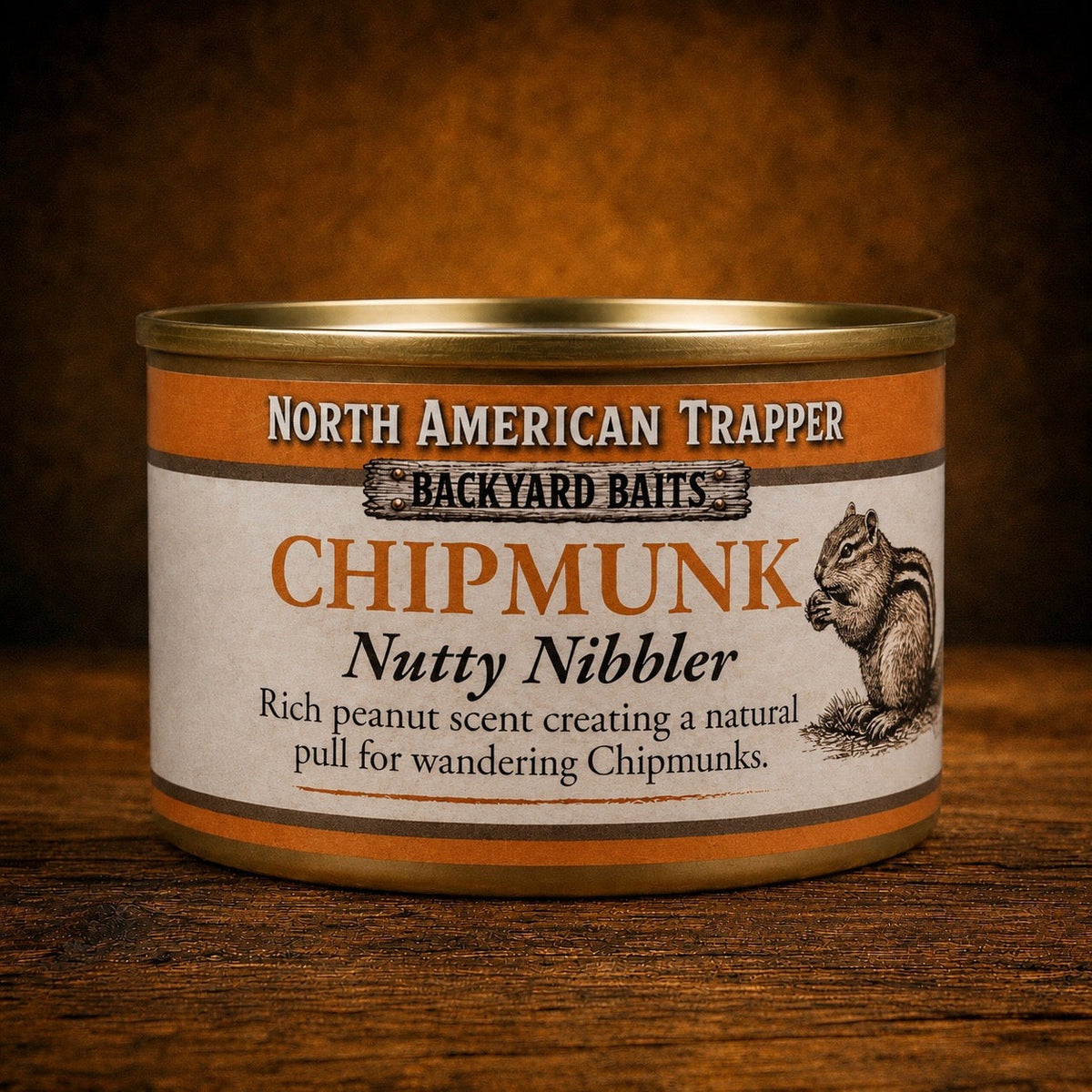
Use Backyard Baits Chipmunk Bait
Once you have selected your trap location, put Backyard Baits Chipmunk Bait inside the cage beyond the trigger.
The bait should be positioned so the chipmunk has to enter the trap far enough to activate the mechanism.
Don’t put the bait directly beside the entrance.
Don’t put it somewhere the chipmunk can reach without entering the trap.
The idea is simple:
Make the chipmunk go where you want it to go.
Where Should I Set the Trap?
Look for a location where the chipmunk is already traveling.
Good locations can include:
- Along the foundation
- Beside a retaining wall
- Along the edge of a deck
- Near an active burrow
- Along a fence or landscape border
- Between the food source and the animal’s cover
Set the trap on solid, level ground.
If the trap rocks, tips, or moves when the chipmunk approaches it, stabilize it.
A small animal can be surprisingly cautious about anything that suddenly moves under its feet.
A Simple Chipmunk Trapping Setup
Step 1: Find the Sign
Locate the holes, feeding damage, droppings, and other evidence.
Step 2: Find the Food
Determine what is attracting the chipmunks to your property.
Step 3: Find the Cover
Locate the bushes, deck, woodpile, rock pile, foundation, or other area the chipmunk uses for protection.
Step 4: Find the Route
Watch how the chipmunk moves between food and cover.
Step 5: Set the Cage Trap
Put the trap directly along that established route.
Step 6: Add Backyard Baits Chipmunk Bait
Place the bait beyond the trigger so the chipmunk must enter the trap to reach it.
Step 7: Stabilize the Trap
Make sure the trap is level and secure.
Step 8: Check the Trap Frequently
Once the trap is set, monitor it regularly. Follow all applicable state and local regulations regarding live trapping and the handling or relocation of wildlife.
What If the Chipmunk Won’t Enter the Trap?
Don’t immediately assume the bait isn’t working.
Sometimes the problem is the location.
If the chipmunk is running past the trap, ask yourself:
Why?
Maybe the trap is sitting too far away from the animal’s travel route.
Maybe there is too much competing food available.
Maybe the trap is exposed in an open area where the chipmunk doesn’t normally travel.
Or perhaps the animal simply needs time to become comfortable with the new object.
Try moving the trap closer to the route the chipmunk is already using.
Pre-Baiting Can Help
If you are dealing with an especially cautious chipmunk, pre-baiting can be useful.
Place bait in or around the trap while leaving the trap inactive, provided your trap’s design allows this to be done safely.
The goal is to let the animal discover that the new object is simply another source of food.
Once the chipmunk is routinely visiting the trap, activate it according to the trap manufacturer’s instructions.
This can be particularly helpful when the animal has become accustomed to feeding around your home and is suspicious of anything new.
Remove the Easy Food
Trapping can solve the immediate problem, but it is also important to address what attracted the chipmunk in the first place.
Consider:
- Moving bird feeders away from structures
- Cleaning up spilled birdseed
- Securing pet food
- Removing fallen fruit
- Keeping garbage and food waste secured
- Cleaning up excess seed around feeding stations
- Eliminating unnecessary piles of lumber, brush, or debris
You don’t necessarily have to eliminate every possible food source.
However, the more competing food that is available, the less important your bait becomes.
What About Chipmunks Under My Deck or Around My Foundation?
This is where paying attention to the animal’s route becomes especially important.
A chipmunk may use a burrow near a foundation but feed somewhere else.
You don’t necessarily need to put the trap directly over the burrow.
Instead, look for the narrow travel corridor the animal uses repeatedly.
A trap positioned along that corridor can be much more effective than a trap sitting randomly beside the hole.
Trap the route—not the hole.
After You Catch the Chipmunk
Once a chipmunk is captured, keep children and pets away from the trap.
Do not handle the animal directly.
Check the trap frequently and follow your state’s wildlife regulations concerning live-trapped animals, including any restrictions on relocation.
Wildlife laws can vary considerably by state and municipality.
Don’t Forget the Reason the Chipmunk Is There
Removing one chipmunk doesn’t necessarily eliminate the reason you have chipmunks.
If you have bird feeders, abundant seed, gardens, fruit trees, brush piles, or other attractive habitat, another animal may eventually take advantage of the same resources.
The long-term solution is a combination of:
Identify the animal.
Find the food.
Find the cover.
Find the route.
Set the trap.
Remove the attraction.
That’s how you turn a frustrating backyard problem into a manageable one.
The Backyard Baits Approach
Chipmunks may be small, but they can create big headaches around a home.
The mistake many homeowners make is chasing the animal instead of studying it.
Don’t chase it.
Watch it.
Find where it comes from. Find where it goes. Find what it is eating. Find where it feels comfortable traveling.
Then put your cage trap where the chipmunk is already going.
Use Backyard Baits Chipmunk Bait to give the animal a reason to enter the trap. Place the bait beyond the trigger, stabilize your setup, and monitor the trap responsibly.
You don’t have to trap the entire backyard.
You just need to put the cage where the chipmunk already wants to go.
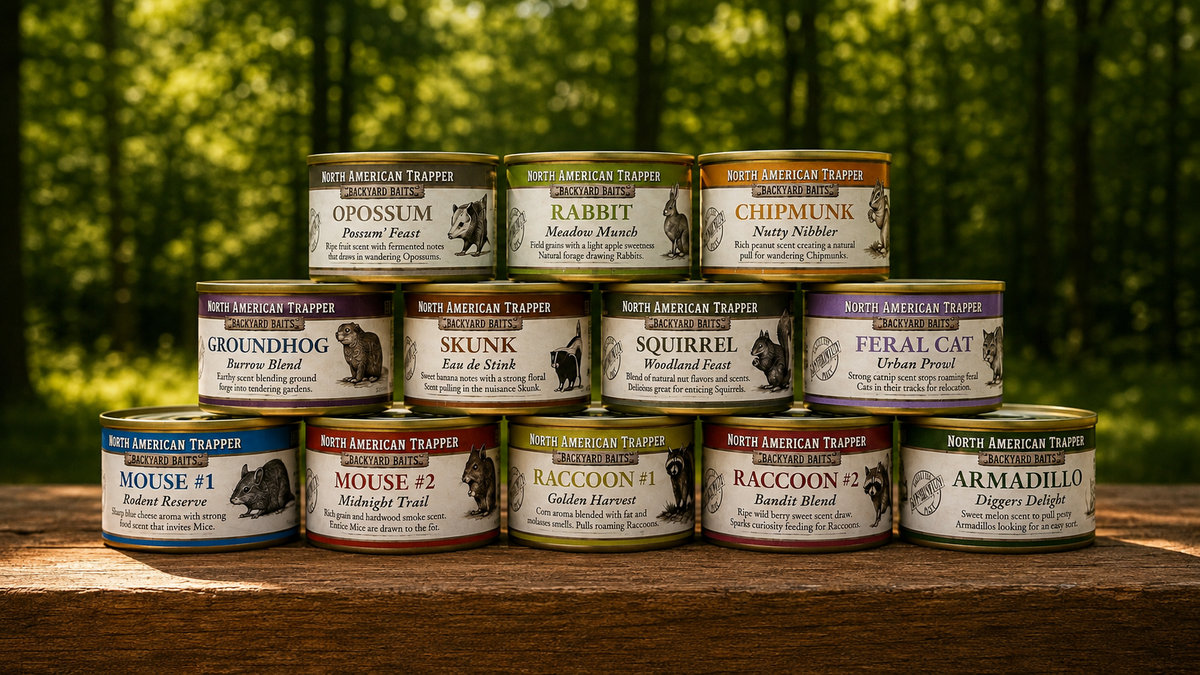
Bait Options