How to Identify and Trap an Armadillo With a Cage Trap and Backyard Baits Armadillo Bait
You step outside in the morning and find your yard looking like somebody spent the night digging for buried treasure.
Small holes everywhere.
Freshly disturbed soil.
Mulch scattered around the flower beds.
Maybe even sections of your lawn that look like they have been scratched, dug up, and turned over.
If you’re dealing with this kind of damage, there is a good chance an armadillo is the culprit.
Armadillos are notorious diggers. They use their powerful claws to search for insects, grubs, worms, and other food beneath the soil. A single animal can leave a surprising amount of damage behind, particularly around lawns, gardens, flower beds, and areas of loose soil.
The key to solving the problem is figuring out what is doing the digging, identifying where that animal is traveling, and putting your cage trap directly in its path.
First, Make Sure It’s an Armadillo
Before setting a trap, take a close look at the damage.
Armadillo digging usually looks different from the damage caused by a groundhog or another larger animal.
Look for Small, Shallow Holes
One of the most recognizable signs of an armadillo is a series of small holes or depressions scattered throughout the lawn.
The holes are often only a few inches across and may appear to be randomly distributed.
That’s because the armadillo isn’t necessarily trying to establish a large burrow every time it digs.
It may simply be searching for something to eat.
Look for Disturbed Soil
Freshly dug soil around a hole is another good clue.
Armadillos use their noses to locate food underground and then use their front claws to dig down to it. This can leave small piles of loose dirt, torn-up grass, and disturbed mulch.
You may find the damage concentrated around:
- Lawns
- Flower beds
- Gardens
- Compost areas
- Mulched landscaping
- Soft soil
- Areas with plenty of insects and grubs
Look for Larger Burrows
Armadillos also dig permanent or semi-permanent shelter burrows.
These openings can be considerably larger than their feeding holes and are often located around brush, fallen logs, rock piles, structures, or other protected areas.
If you find a larger burrow combined with numerous small feeding holes throughout your yard, the evidence of an armadillo becomes much stronger.
Armadillos Are Often Nocturnal
One reason homeowners have trouble catching the animal responsible for the damage is simple:
You may never see it causing the damage.
Armadillos are primarily active at night, although they can occasionally be seen during daylight hours.
You may go to bed with an intact lawn and wake up to a yard covered in fresh holes.
If you’re trying to identify an armadillo, inspect the yard early in the morning for fresh digging.
Fresh damage tells you where the animal was active during the previous night.
Find the Travel Route
Once you’ve established that an armadillo is responsible, start looking beyond the individual holes.
- Where is the animal coming from?
- Where is it going?
- Does the damage appear to lead from a wooded area toward the lawn?
- Is there a fence line, creek bank, brushy edge, or other protected area nearby?
Armadillos often follow predictable routes while searching for food.
You don’t necessarily want to put your cage trap in the middle of the area where you see the most holes.
Instead, look for a travel corridor.
That’s where your trap can become much more effective.
Choosing the Right Cage Trap
Use a sturdy cage trap large enough to comfortably contain an armadillo.
A trap with a solid trigger mechanism and an appropriately sized entrance is important because armadillos are surprisingly powerful animals for their size.
The trap should sit firmly on the ground.
If it rocks or moves when the animal touches it, you have introduced another reason for the armadillo to avoid it.
Make sure the trap is positioned so the armadillo can enter naturally. Test the trigger mechanism before leaving the trap set.
Using Backyard Baits Armadillo Bait
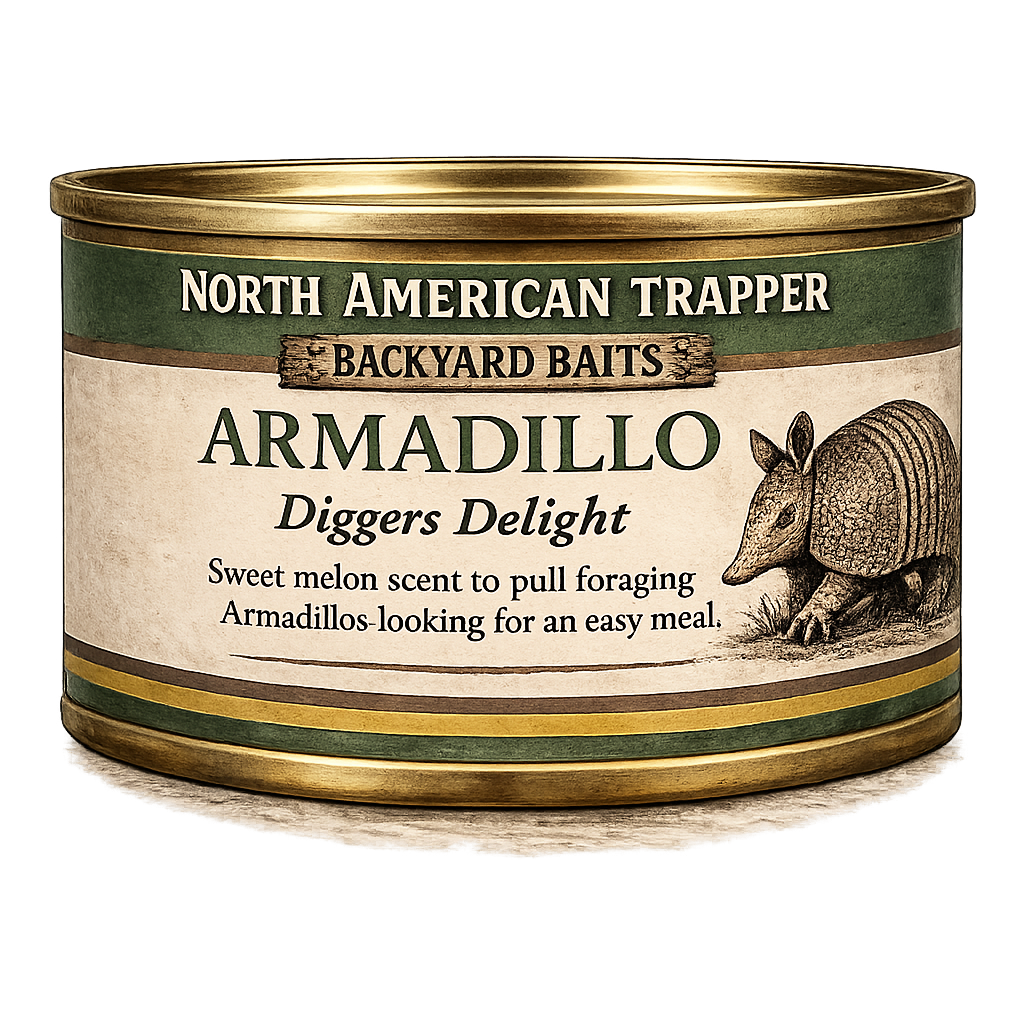
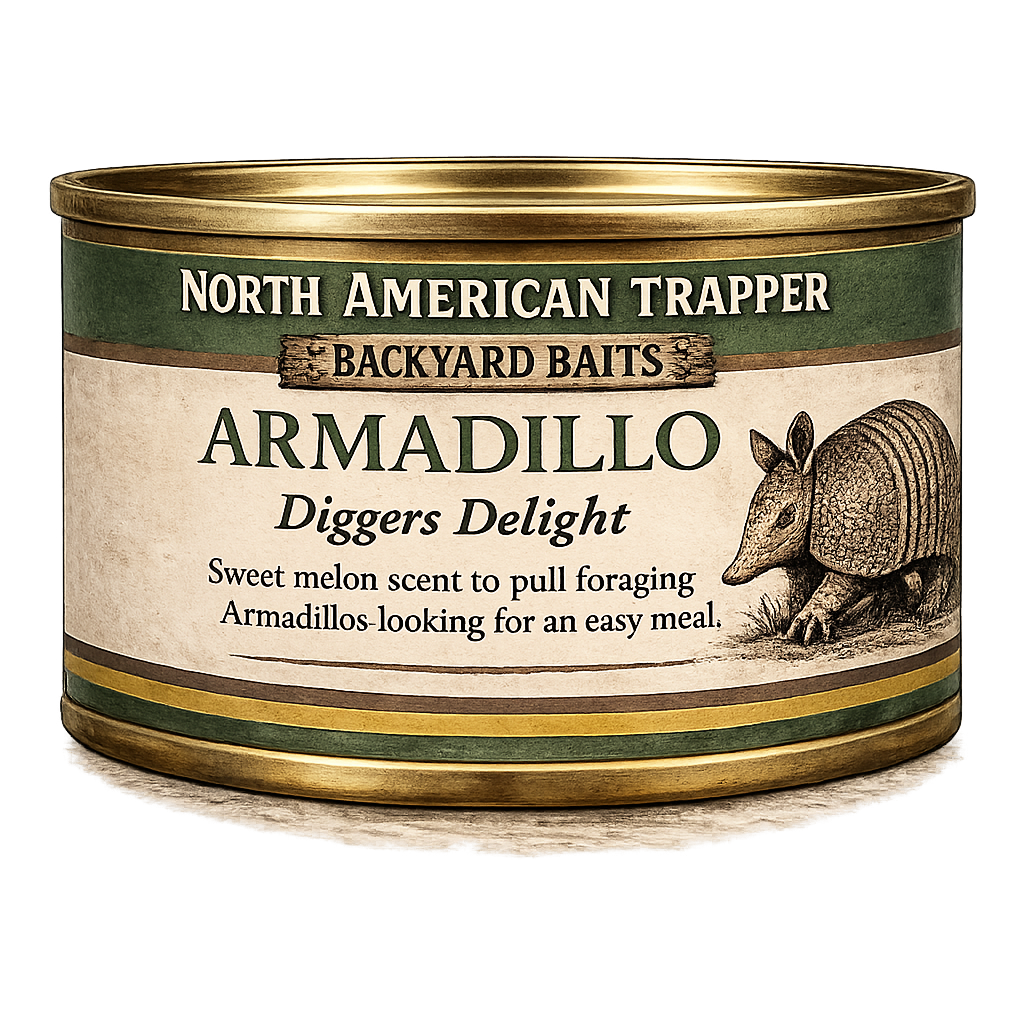
This is where Backyard Baits Armadillo Bait comes into the equation.
Place the bait toward the back of the cage trap, beyond the trigger.
You want the armadillo to walk completely inside the trap while investigating the bait.
Don’t put the bait directly at the entrance.
The objective is to make the animal commit to entering the cage.
For the best results, use the bait as part of a complete trapping setup rather than relying on bait alone.
Location is everything.
The best bait in the world won’t help much if the trap is sitting where the armadillo doesn’t naturally travel.
Where Should You Put the Trap?
Start with the animal’s established travel route.
Good locations may include:
- Along the edge of a lawn
- Beside a fence line
- Along a wooded edge
- Near a brush line
- Between the animal’s shelter and feeding areas
- Along a narrow travel corridor
- Near a frequently used path
If you have identified an active armadillo burrow, placing the trap near the burrow can also be effective.
However, don’t simply put the trap wherever you happen to see a hole.
Remember:
The holes tell you where the armadillo was feeding. The travel route tells you where to intercept it.
Make the Trap Easy to Enter
Armadillos are low to the ground.
The trap should sit level with the surrounding surface.
Avoid leaving a large gap underneath the cage.
You can use natural material from the surrounding area to help the trap blend into its immediate surroundings and eliminate obvious gaps along the sides.
Don’t completely bury the trap or make it difficult for the animal to enter.
The goal is to make the cage look like a normal part of the environment.
A Simple Armadillo Cage-Trapping Setup
Step 1: Identify the Damage
Look for small feeding holes, disturbed soil, and fresh digging.
Step 2: Confirm That an Armadillo Is Likely Responsible
Consider the size of the holes, their location, and the overall pattern of damage.
Step 3: Find the Travel Route
Look for paths between wooded cover, shelter, and feeding areas.
Step 4: Select a Sturdy Cage Trap
Use a trap large enough for an armadillo, and make sure it functions properly.
Step 5: Position the Trap
Place the trap along the animal’s established travel route rather than positioning it randomly in the yard.
Step 6: Add Backyard Baits Armadillo Bait
Place the bait beyond the trigger. The animal should have to enter the cage completely to reach it.
Step 7: Stabilize the Trap
Make sure it sits firmly on the ground and doesn’t rock or wobble.
Step 8: Minimize Disturbance
Once the trap is set, give the area some space.
Step 9: Check the Trap Frequently
Monitor the trap regularly and follow all applicable regulations for checking live traps.
What If the Armadillo Ignores the Trap?
Don’t automatically assume the bait isn’t working.
Sometimes the problem is trap placement.
If you continue seeing fresh holes but the trap remains untouched, go back and examine the animal’s travel pattern.
Ask yourself:
- Where is it coming from?
- Where is it going?
- Which route does it use repeatedly?
Move the trap if necessary.
You can also consider pre-baiting the area or trap, where legal and appropriate, to allow the animal to become accustomed to the new object before activating the trap.
However, don’t keep changing everything at once.
Change one variable at a time so you can determine what is actually working.
Don’t Chase the Holes—Intercept the Animal
This is one of the biggest mistakes homeowners make with armadillos.
They see 10 holes in the lawn and think they need 10 traps.
Usually, that’s not the answer.
The holes are evidence of feeding activity.
The armadillo has to travel between its shelter and those feeding locations.
Find that route.
Then intercept it.
Trap the animal’s routine—not the damage it already left behind.
What Do You Do After You Catch an Armadillo?
Before setting a live trap, know what your state and local laws allow.
Regulations concerning the trapping, transportation, and relocation of wildlife vary by location. Some jurisdictions restrict relocation or require specific procedures.
Don’t assume you can simply drive the animal somewhere else and release it.
Check with your state wildlife agency or the appropriate local authority before trapping and especially before relocating a live armadillo.
Once an animal is captured, handle the situation according to applicable laws and avoid unnecessary contact with the animal.
Fix the Reason They’re Coming to Your Yard
Catching one armadillo may solve today’s problem, but your property may still be attractive to another one.
Look at the conditions that brought the animal there in the first place.
Areas with abundant insects and other food, loose soil, mulch, compost, irrigation, and protective cover can all make a property attractive to wildlife.
After the animal problem has been resolved, consider reducing unnecessary attractants and protecting areas that are particularly vulnerable to digging.
For gardens and landscaping, physical exclusion can be an important part of a long-term solution.
The Backyard Baits Approach
Solving a backyard wildlife problem doesn’t have to be complicated.
Start by identifying the animal.
Then identify the signs.
Next, identify the animal’s habits.
For armadillos, those habits often include nighttime feeding, repeated travel routes, and an almost obsessive search for food beneath the soil.
A properly sized cage trap, positioned along an established travel route and baited with Backyard Baits Armadillo Bait, gives homeowners a practical way to target the animal responsible for the damage.
Remember the three things that matter most:
Find the signs.
Find the route.
Put the trap where the armadillo wants to go.
When you’re dealing with an armadillo tearing up your backyard, you don’t need to trap the whole yard.
You just need to intercept the digger.
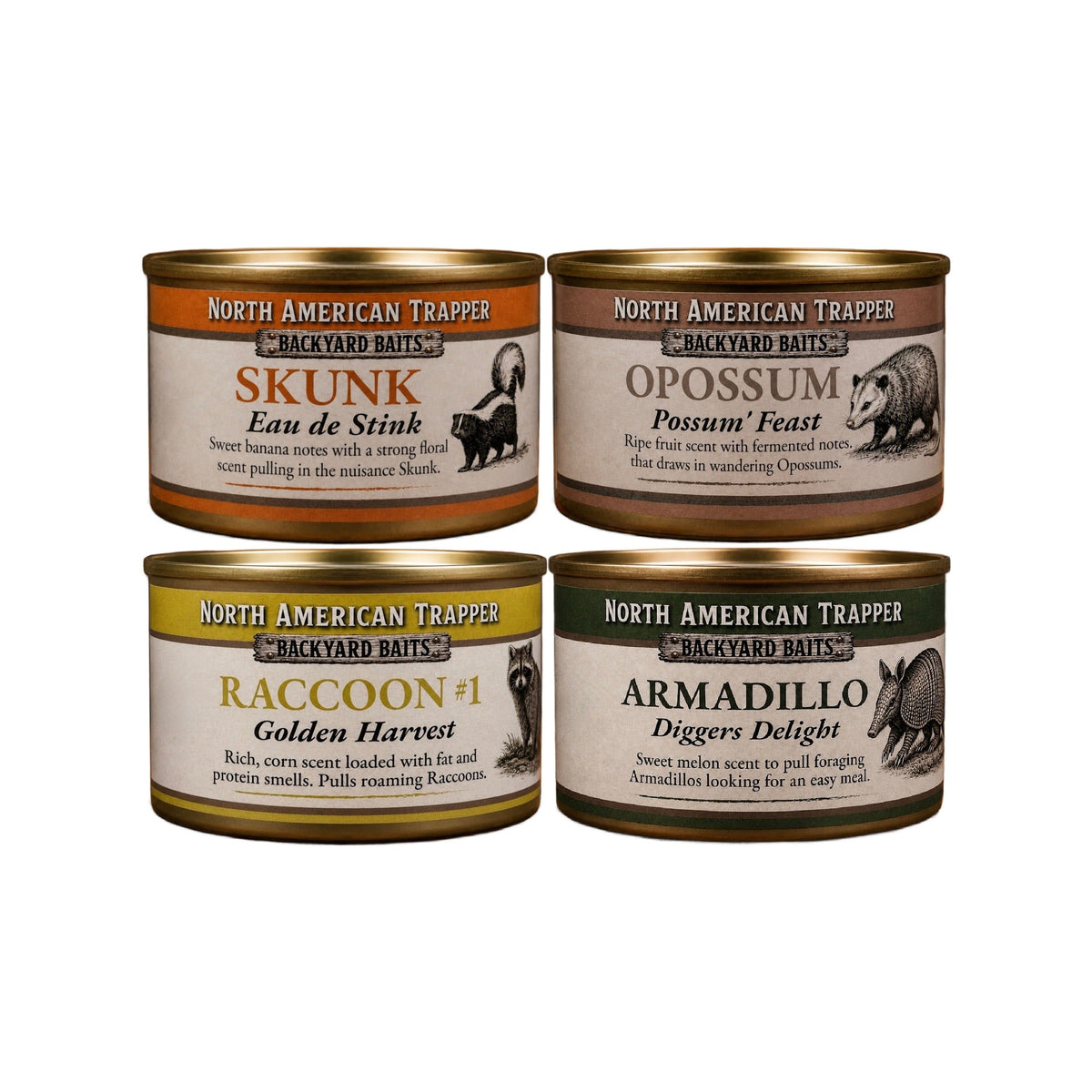
Bait Options