How to Identify and Trap a Squirrel With a Cage Trap and Backyard Baits Squirrel Bait
You walk outside and notice that something has been busy.
Maybe your flower pots have been dug into.
Your garden has missing plants.
Birdseed is scattered everywhere.
There are small holes in the lawn and freshly disturbed soil around your landscaping.
Or maybe something has been chewing on your trees, digging up bulbs, and burying food throughout the yard.
If the damage is happening during the daytime and you’re seeing an animal running along fences, trees, decks, or rooftops, there’s a good chance you’re dealing with a squirrel.
Squirrels are energetic, persistent, and incredibly adaptable. Once they discover that your backyard provides food, water, or shelter, they can quickly become a regular nuisance.
The good news is that you can often solve a squirrel problem by understanding its daily routine and using a properly positioned cage trap.
The key is simple:
Don’t just trap where you see the damage. Trap where the squirrel travels.
First, Make Sure It’s a Squirrel
Before setting a trap, identify the animal causing the problem.
Squirrels can create several different types of damage around a home.
Look for Small Holes
Squirrels frequently dig small holes in lawns, garden beds, and flower beds while burying or recovering food.
You may find freshly disturbed soil around:
- Trees
- Shrubs
- Flower beds
- Mulch
- Garden areas
- Potted plants
- Bulb plantings
The holes are generally much smaller than those made by groundhogs or other larger digging animals.
Look for Missing Nuts and Seeds
If you have mature, nut-producing trees nearby, squirrels may be making regular trips to your property.
They may also be attracted to:
- Bird feeders
- Corn
- Sunflower seeds
- Nuts
- Fruit
- Garden vegetables
A bird feeder that is constantly being raided is one of the easiest ways to discover that squirrels have moved into the neighborhood.
Look for Chewing Damage
Squirrels are rodents, and their teeth continually grow.
That means they have a natural need to gnaw.
Look for chewing on:
- Tree bark
- Wooden structures
- Decks
- Fencing
- Garden structures
- Electrical or utility components
- Plastic containers
Chewing damage combined with daytime sightings is a strong clue.
Look Up
One of the biggest mistakes homeowners make when looking for signs of squirrels is only looking at the ground.
Squirrels are three-dimensional pests.
They use the ground, trees, fences, decks, rooftops, and other structures.
Look for:
- Squirrel nests
- Holes in trees
- Entry points into attics
- Travel routes along fences
- Branches touching buildings
- Tracks in soft soil
- Chewed bark
If you’re hearing scratching in your attic or seeing squirrels running across the roof, your problem may be more than a garden nuisance.
Find the Squirrel’s Food Source
Before setting a cage trap, figure out what the squirrel wants.
Food is often the answer.
Maybe you have a bird feeder that is attracting them.
Maybe there’s a walnut, oak, hickory, or other nut-producing tree nearby.
Maybe they’re raiding your garden.
Maybe they’re digging through your flower beds looking for buried food.
Once you know what the squirrel is feeding on, you can begin predicting its movements.
Find the Squirrel’s Travel Route
This is where trapping gets interesting.
Squirrels tend to use familiar routes.
They may travel:
- Along fences
- Across decks
- Along tree branches
- Between trees
- Across rooftops
- Along the edges of buildings
- Through landscaped areas
- Between shelter and food
Watch the property.
You don’t have to sit outside all day.
Even a few minutes of observation can tell you a lot.
- Where does the squirrel enter the yard?
- Where does it leave?
- Which tree does it climb?
- Which fence does it run along?
- Where does it go when it gets nervous?
Those observations can tell you exactly where your trap belongs.
Choosing the Right Cage Trap
Use a sturdy cage trap appropriately sized for squirrels.
The trap should be large enough for the animal to enter comfortably, but it should not be unnecessarily oversized.
Make sure the trap has:
- A reliable trigger
- A properly functioning door
- No sharp or damaged wire
- A stable base
- A trigger that operates smoothly
Test the trap before setting it.
You don’t want to discover a mechanical problem after you’ve spent time establishing the trap in the right location.
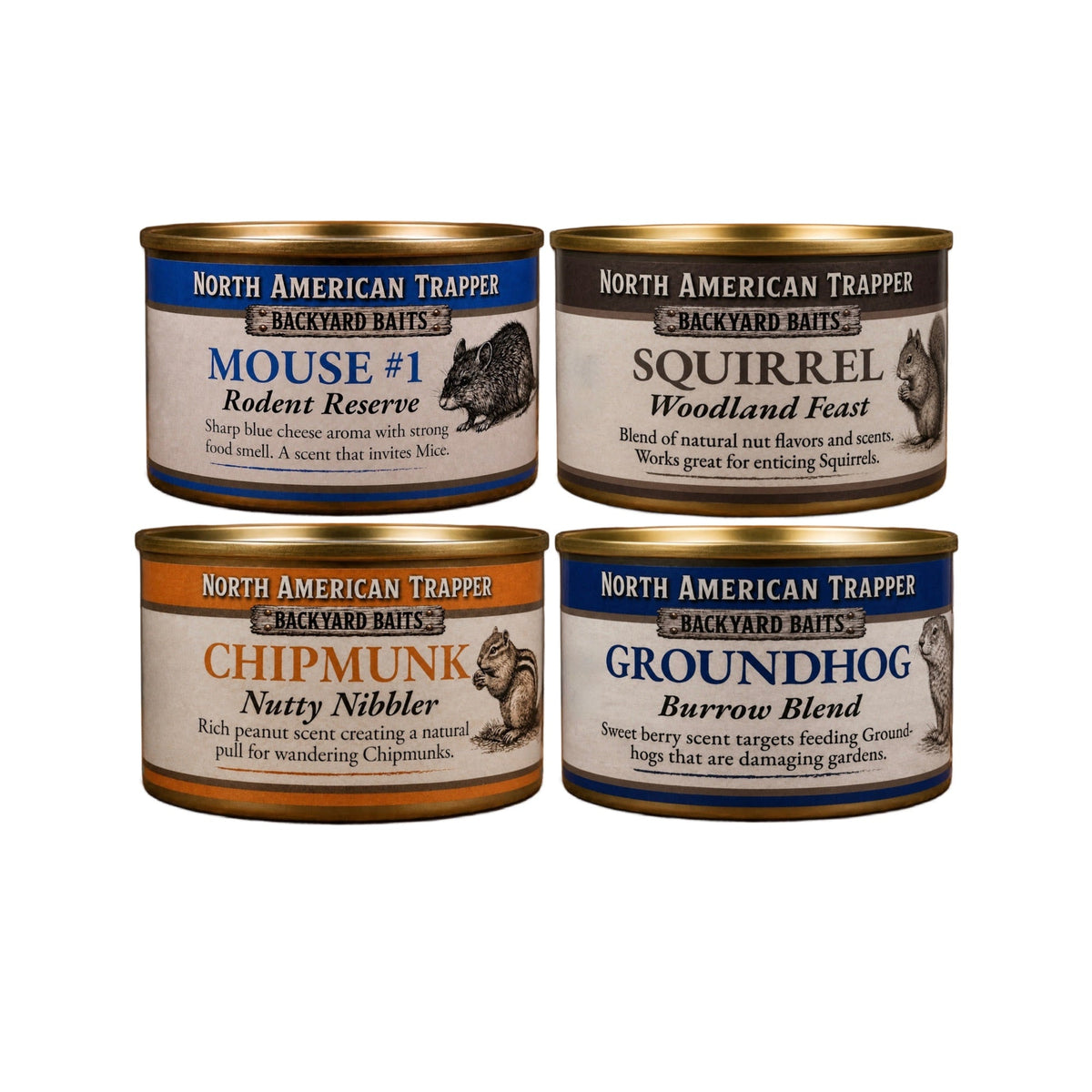
Using Backyard Baits Squirrel Bait
Now that you have the trap in the right location, it’s time to put the bait to work.
Place Backyard Baits Squirrel Bait toward the back of the cage trap, beyond the trigger.
The objective is to make the squirrel enter the trap completely to investigate the bait.
Don’t place the bait directly at the entrance.
You want the squirrel to commit.
The peanut-oil-based formulation of Backyard Baits Squirrel Bait provides a targeted bait option for your squirrel-trapping setup.
But remember:
Bait attracts the squirrel. Placement catches the squirrel.
If the cage is sitting where the squirrel never travels, even the most attractive bait isn’t going to solve the problem.
Where Should You Put the Trap?
Look for locations where the squirrel already feels comfortable traveling.
Along a Fence
If squirrels routinely run along a fence, use that travel corridor.
Near a Tree
If a particular tree is being used repeatedly, position the trap along the squirrel’s approach route.
Near a Garden
If the squirrel repeatedly enters your garden from one direction, intercept it there.
Near a Structure
If the squirrel is traveling between a tree and a building, the route between the two may provide an excellent location.
Near the Food Source
If the squirrel is repeatedly visiting a bird feeder or another food source, consider intercepting it on the way to that food.
Whenever practical, reduce competing food sources while you’re trying to trap.
Think Like a Squirrel
This is probably the most important part of the entire process.
A squirrel doesn’t know that you’re trying to catch it.
It simply knows its routine.
Every day, it gets up.
It leaves its shelter.
It follows familiar routes.
It finds food.
It returns to cover.
If you can figure out that routine, you can put the cage trap directly into it.
You’re not really trapping the squirrel.
You’re trapping its routine.
Make the Cage Easy to Enter
Squirrels are naturally suspicious of changes to their environment.
A cage trap sitting in an exposed location may be ignored.
Set the trap securely and make it easy for the squirrel to approach.
If you’re using the trap on the ground, make sure it sits level and doesn’t wobble.
If you’re positioning it near a structure or along a travel route, make sure the squirrel has a natural approach.
Don’t create unnecessary obstacles.
The simpler the setup, the better.
A Simple Squirrel Cage-Trapping Setup
Step 1: Identify the Animal
Look for small holes, chewing damage, bird-feeder activity, and daytime sightings.
Step 2: Identify What Is Attracting the Squirrel
Find the food source.
Step 3: Find the Squirrel’s Shelter
Look for trees, nests, structures, and other protected areas.
Step 4: Watch the Travel Route
Determine how the squirrel moves between shelter and food.
Step 5: Select a Properly Sized Cage Trap
Choose a sturdy trap designed for squirrels and appropriate for your situation.
Step 6: Position the Trap
Place the trap along the squirrel’s established travel route.
Step 7: Add Backyard Baits Squirrel Bait
Place the bait beyond the trigger so the squirrel must enter the cage to reach it.
Step 8: Stabilize the Trap
Make sure the trap is level, stable, and secure.
Step 9: Reduce Competing Food Sources
Remove or secure other readily available food sources whenever practical.
Step 10: Check the Trap Frequently
Monitor the trap regularly and follow all applicable trapping and wildlife regulations.
What If the Squirrel Won’t Enter?
Don’t immediately assume the bait isn’t working.
Squirrels are observant animals.
If you see the squirrel approaching the trap but refusing to enter, you’ve learned something valuable.
The trap may be:
- Too exposed
- Too far from the travel route
- Unstable
- In an unnatural location
- Competing with a better food source
Try moving the trap closer to the squirrel’s normal route.
Sometimes a few feet can make all the difference.
Pre-Baiting Can Help
If a squirrel is particularly suspicious of the cage, consider pre-baiting.
Place bait in or around the trap while the trap is inactive, provided the trap’s design allows this to be done safely.
Allow the squirrel to investigate the cage without being captured.
Once the squirrel becomes comfortable entering the trap to reach the bait, activate it according to the manufacturer’s instructions.
This isn’t always necessary.
A squirrel that is highly motivated by the bait and already comfortable around the cage may enter without any pre-baiting period.
Don’t Leave the Bird Feeder Wide Open
If you’re trying to trap a squirrel while leaving a bird feeder overflowing with sunflower seeds 20 feet away, you’re making your job harder.
When practical, temporarily eliminate or secure competing food sources.
These can include:
- Birdseed
- Pet food
- Fallen nuts
- Garden produce
- Fruit
- Outdoor food scraps
Again, the goal isn’t to starve the animal.
It’s to remove the easy alternatives while you’re addressing the problem.
What About Squirrels Getting Into the House?
This requires a little more attention.
If squirrels are getting into your attic, soffit, chimney, or another part of your home, trapping the animal is only part of the solution.
You also need to identify how it is getting inside.
Do not simply seal the hole while a squirrel may still be inside.
There may also be young squirrels present.
Once you’re certain the area is vacant, repair the entry point and eliminate access routes where possible.
Trim branches that provide easy access to the roof and inspect vulnerable areas around the structure.
What Do You Do After You Catch the Squirrel?
Before setting your trap, learn your state and local regulations.
Rules concerning live trapping, transportation, and relocation vary considerably by jurisdiction.
Don’t assume you can simply drive a captured squirrel somewhere else and release it.
Some locations restrict relocation or have specific requirements concerning where and how wildlife can be released.
Know the law before you trap.
If you are unsure how to handle a captured squirrel legally, contact your state wildlife agency or a qualified nuisance-wildlife professional.
Keep children and pets away from the cage, and avoid unnecessary handling of the animal.
Don’t Forget the Reason the Squirrel Came
Removing one squirrel doesn’t necessarily solve the problem on your property.
If you still have abundant food, easy access to your house, and plenty of shelter, another squirrel can take its place.
After dealing with the immediate problem, look at the property.
- Secure bird feeders
- Clean up spilled seed
- Protect gardens
- Remove fallen fruit and nuts where practical
- Trim branches that provide easy access to buildings
- Inspect structures for entry points
Make your property less convenient for the next squirrel.
The Backyard Baits Approach
A successful backyard wildlife solution starts with identifying the animal.
Then identify the signs.
Next, figure out what the animal wants.
With squirrels, that usually means food, shelter, and an easy route between the two.
Once you understand that pattern, your cage trap becomes much more than a box sitting in the backyard.
It becomes an interception point.
A properly sized cage trap, positioned along the squirrel’s established travel route and baited with Backyard Baits Squirrel Bait, gives homeowners a practical way to target the animal causing the problem.
Remember:
Identify the animal.
Read the signs.
Find the food.
Find the shelter.
Find the route.
Set the trap.
You don’t have to trap the entire backyard.
You just need to put the cage where the squirrel already wants to go.
Bait Options