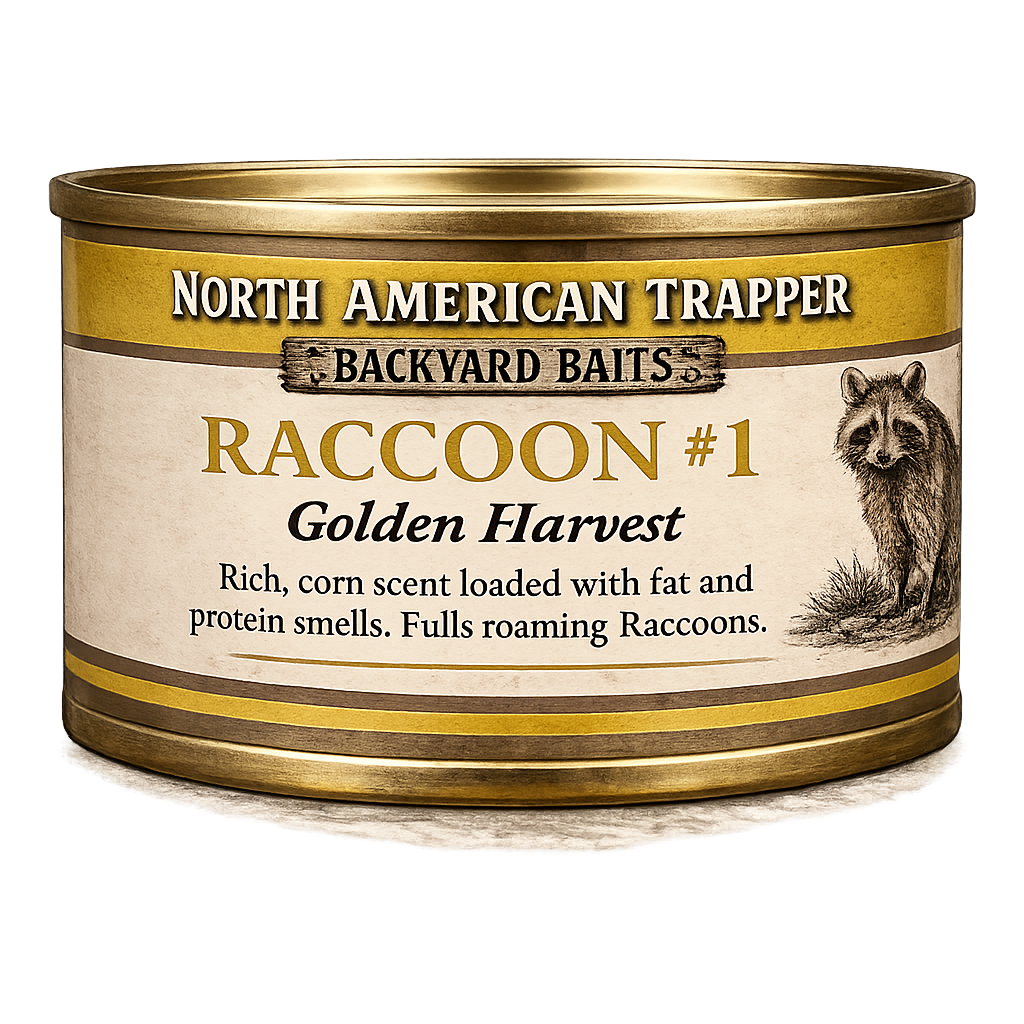
How to Identify and Trap a Raccoon With a Cage Trap and Backyard Baits Raccoon Bait
You walk outside and find the garbage can knocked over.
The garden has been disturbed.
Birdseed is scattered across the ground.
Maybe there’s a shallow hole in the lawn, some overturned mulch, or a mess around the compost pile.
You know somebody—or something—was there during the night.
There’s a good chance you’re dealing with a raccoon.
Raccoons are intelligent, adaptable, and extremely good at finding easy meals around homes. Once they discover that your property provides food, water, or shelter, they may keep coming back night after night.
Fortunately, if a raccoon has become a nuisance around your home, shed, garden, chicken area, or another outbuilding, a properly positioned cage trap can give you a practical way to deal with the problem.
The trick isn’t simply putting a trap in the backyard.
You need to trap where the raccoon wants to go.
First, Make Sure It’s a Raccoon
Before you set a trap, identify the animal responsible for the damage.
Raccoons can leave several different types of evidence, depending on what they’re doing.
Look for Overturned Objects
Raccoons are natural investigators.
They’ll turn over rocks, logs, mulch, containers, and other objects while searching for insects and food.
If you repeatedly find things disturbed overnight, a raccoon should be high on your list of suspects.
Look for Lawn Damage
Raccoons will sometimes dig or tear into lawns while searching for grubs and other food sources.
The damage may look like small sections of turf have been peeled back or disturbed.
You may also see shallow digging around landscaping, flower beds, and gardens.
Check Your Garbage
This is one of the easiest clues.
If your garbage can is repeatedly tipped over, bags are torn open, or food scraps are scattered around the yard, you’re probably dealing with a very motivated animal.
A raccoon that discovers an easy meal at your house may continue returning until that food source disappears.
Look for Tracks
Raccoon tracks are distinctive.
Their front and rear feet have five toes, giving their tracks a hand-like appearance.
Check muddy areas, soft soil, garden beds, and areas around ponds or other water sources.
Look for Shelter
Raccoons can use a surprising variety of locations for shelter.
Check:
- Under decks
- Under porches
- Inside sheds
- Around woodpiles
- In hollow trees
- In crawl spaces
- Around outbuildings
- Near brush piles
If you’re finding nighttime damage and have a potential den or shelter nearby, you may be able to develop a clear picture of what’s happening.
Raccoons Are Primarily Nocturnal
One reason raccoon problems can be frustrating is that you may rarely see the animal responsible.
You go to bed with a clean yard.
You wake up to a mess.
Raccoons are primarily active at night, although they can occasionally be seen during daylight hours.
If you’re trying to determine whether a raccoon is responsible, inspect the property in the morning.
Fresh tracks, disturbed garbage, overturned objects, and new digging can tell you where the animal was active during the night.
Find the Raccoon’s Travel Route
Once you’ve determined that you’re dealing with a raccoon, start thinking like one.
- Where is it coming from?
- Where is it going?
- Where is it finding food?
- Where is it finding shelter?
Raccoons frequently travel along edges and protected routes rather than simply walking straight across the middle of an open yard.
Look for:
- Fence lines
- Creek banks
- Wood lines
- Brushy edges
- Areas beside buildings
- Trails through vegetation
- Routes between shelter and food
This information becomes extremely important when you’re deciding where to put your cage trap.
Choosing the Right Cage Trap
Use a sturdy cage trap designed for raccoon-sized animals.
The trap should be long enough for the raccoon to enter completely. It should also have a trigger mechanism capable of reliably closing the door once the animal commits to entering the trap.
Before setting it, test the trap.
Make sure:
- The door operates correctly
- The trigger functions properly
- The trap sits firmly on the ground
- There are no dangerous or sharp edges
- The cage cannot easily be tipped over
A raccoon is strong, intelligent, and extremely capable of turning a poorly positioned trap into a lesson for the homeowner.
Stabilize the Trap
Don’t overlook this simple step.
If the trap rocks when the raccoon touches it, the animal may become suspicious.
Set the trap firmly on the ground.
If necessary, use natural material around the base to eliminate obvious gaps and make the trap feel like part of the surrounding environment.
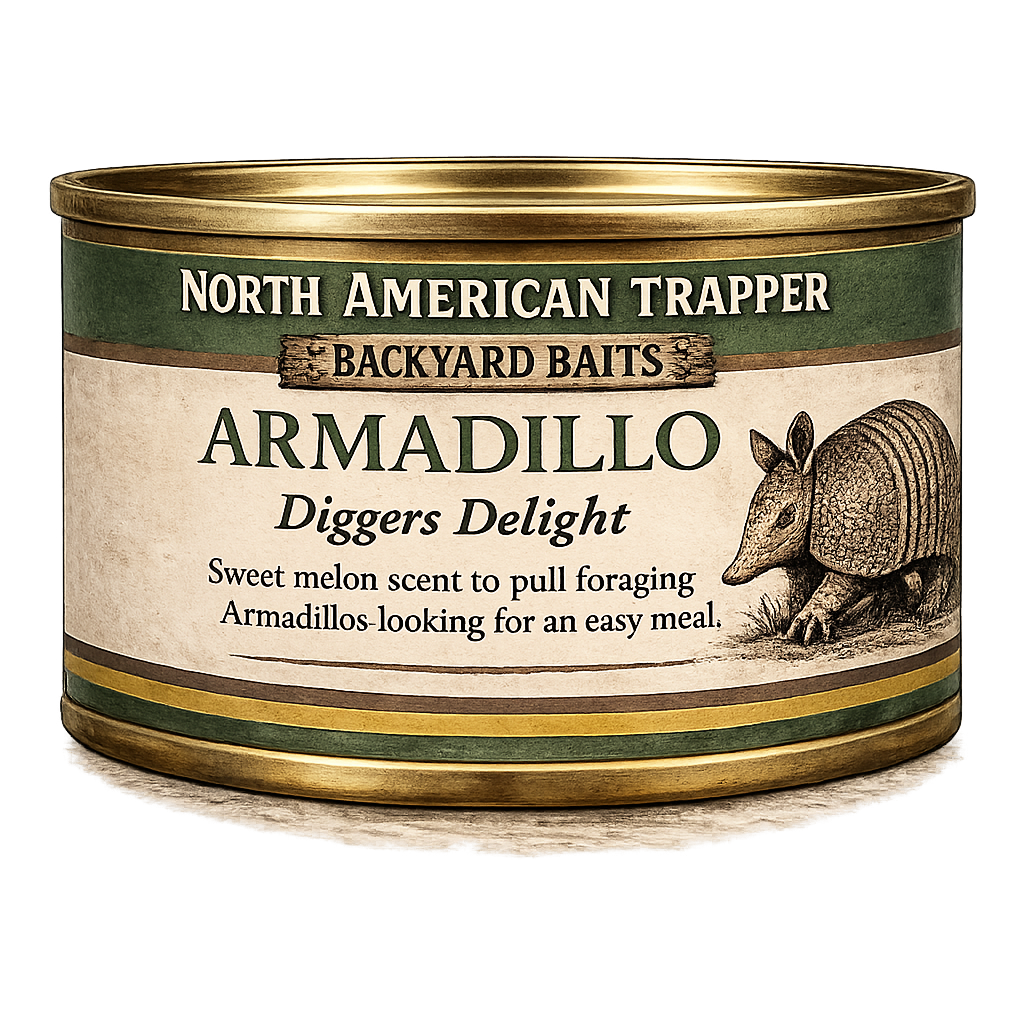
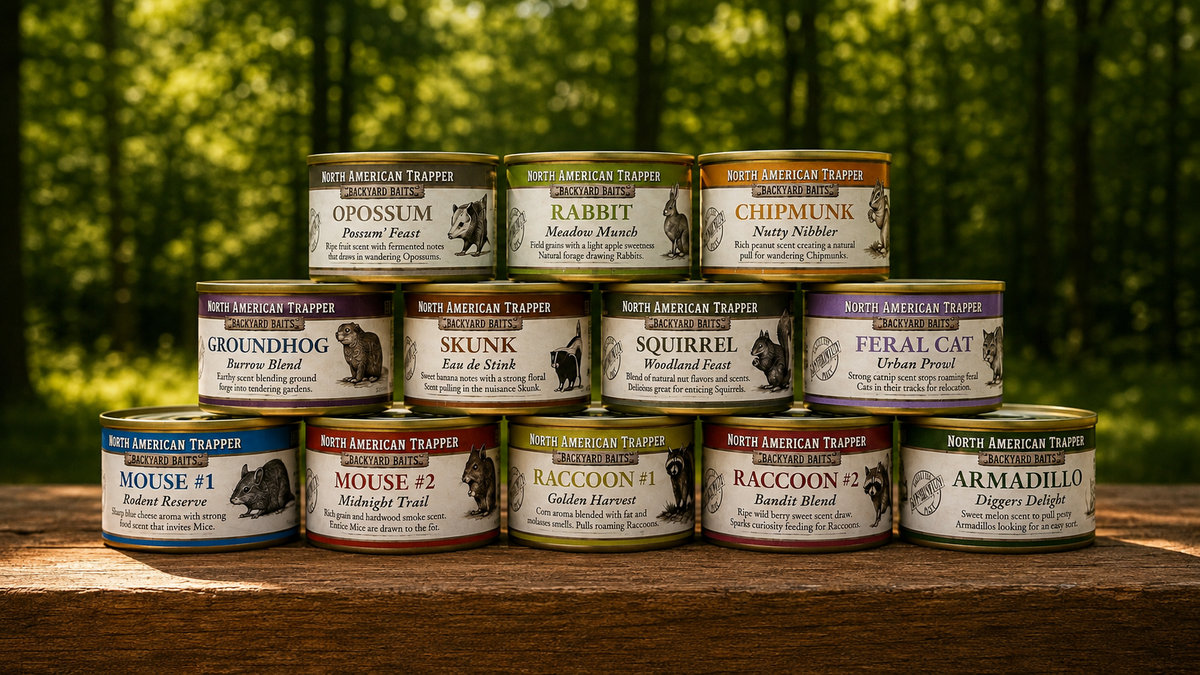
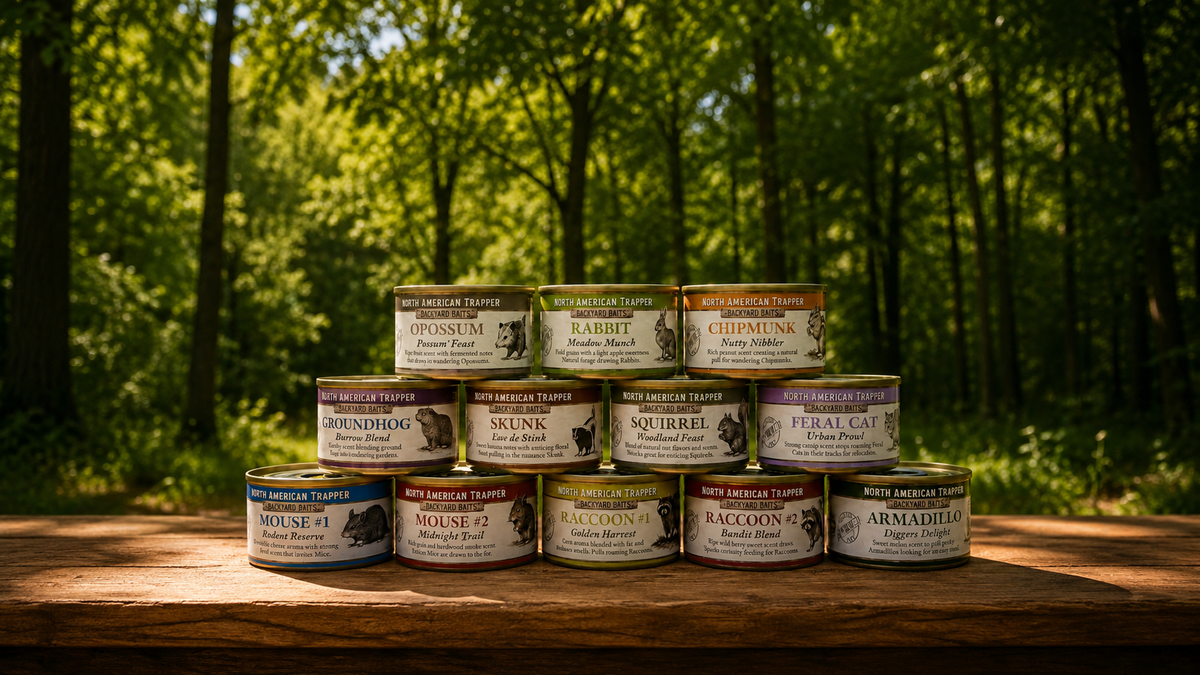
Using Backyard Baits Raccoon Bait
Now it’s time to put the raccoon’s appetite to work.
Place Backyard Baits Raccoon Bait toward the back of the cage trap, beyond the trigger.
The goal is to make the raccoon walk completely into the trap to investigate the bait.
Don’t put the bait directly inside the entrance.
You want the raccoon to commit.
The farther the raccoon has to enter to reach the bait, the better your setup can be.
If you’re dealing with a particularly cautious raccoon, don’t be afraid to let the animal tell you what it wants.
Watch where it travels.
Watch what it investigates.
Watch which food sources it repeatedly visits.
Then put the trap where those habits work in your favor.
Where Should You Put the Trap?
This is arguably the most important part of the setup.
Don’t automatically put the trap in the middle of the yard simply because that’s where you found evidence of raccoon activity.
Instead, intercept the animal.
Good locations can include:
Along a Travel Route
If you have identified a well-used path along a fence, building, or wooded edge, position the trap where the raccoon naturally travels.
Near a Food Source
If the raccoon repeatedly visits a particular area looking for food, that can be an excellent location.
However, eliminate competing food sources whenever practical.
A raccoon has no reason to enter your trap if it can get an easier meal somewhere else.
Near a Structure
If the animal is repeatedly visiting a shed, porch, deck, or other structure, the trap can sometimes be positioned along its approach route.
Near a Den or Shelter
If you have identified a raccoon den or shelter area, placing a cage trap along the animal’s normal travel route can be effective.
Do not seal a den or trap a mother away from dependent young.
Always determine whether young animals may be present before attempting to remove an adult raccoon from a structure.
A Simple Raccoon Cage-Trapping Setup
Step 1: Identify the Animal
Look for tracks, nighttime activity, overturned objects, garbage damage, and lawn disturbance.
Step 2: Find the Food Source
Determine what is attracting the raccoon.
Step 3: Find the Travel Route
Look for the path between shelter and food.
Step 4: Select a Sturdy Cage Trap
Choose a properly sized cage trap designed for raccoons.
Step 5: Position the Trap
Place the trap along the raccoon’s established travel route. Don’t position it randomly in the yard.
Step 6: Add Backyard Baits Raccoon Bait
Place Backyard Baits Raccoon Bait beyond the trigger so the raccoon must enter the cage to reach it.
Step 7: Stabilize the Trap
Make sure it doesn’t rock, wobble, or tip over.
Step 8: Reduce Competing Food Sources
Secure garbage, pet food, birdseed, and other attractants whenever possible.
Step 9: Check the Trap Frequently
Monitor the trap regularly and follow all applicable regulations concerning live-trap checks.
What If the Raccoon Won’t Enter?
Welcome to trapping raccoons.
They’re smart.
Sometimes they’re smarter than we’d like them to be.
If you have fresh raccoon activity but the trap remains untouched, don’t immediately blame the bait.
Look at your setup.
- Is the trap in the wrong location?
- Is there easier food nearby?
- Is the cage sitting in an exposed location?
- Does it wobble?
- Is the animal approaching from a different direction?
- Is the trap too close to an area where the raccoon feels threatened?
Sometimes moving the trap just a few feet can make the difference.
Consider Pre-Baiting
A particularly cautious raccoon may benefit from pre-baiting.
Place bait in or around the trap while the trap is inactive, provided its design allows this to be done safely.
This allows the animal to become comfortable approaching the cage.
Once the raccoon is regularly visiting the bait, activate the trap according to the manufacturer’s instructions.
This isn’t always necessary.
A hungry raccoon that is already comfortable around the trap may enter immediately.
Don’t Let the Raccoon Eat Somewhere Else
One of the biggest mistakes homeowners make is leaving every other food source available while trying to trap.
Think about it from the raccoon’s perspective.
Why walk into a cage to get your bait if there is:
- An overflowing garbage can
- Pet food on the porch
- Birdseed underneath a feeder
- An open compost container
- Fallen fruit
- Outdoor food scraps
Remove or secure competing food sources whenever practical.
You want the trap to become the easiest opportunity.
What Do You Do After You Catch the Raccoon?
This is where you need to know your local regulations.
Wildlife trapping, transportation, and relocation laws vary by state and municipality.
Don’t assume that you can simply take a captured raccoon to another property and release it.
Relocation may be restricted or prohibited in some jurisdictions, and additional requirements may apply.
Before setting a live trap, determine what you’re legally allowed to do with a captured raccoon.
If you are unsure, contact your state wildlife agency or a qualified nuisance-wildlife professional.
Never handle a raccoon unnecessarily or attempt to touch the animal directly.
Don’t Forget the Reason the Raccoon Came
Catching the raccoon solves the immediate problem.
However, if your property still offers everything a raccoon wants, another one may eventually move in.
After the animal is removed, inspect the property and take the following steps:
- Secure garbage
- Remove outdoor pet food
- Clean up spilled birdseed
- Keep compost secured
- Remove unnecessary food sources
- Inspect structures for openings where raccoons can gain access
If a raccoon has been getting into an attic, crawl space, shed, or other structure, repair the entry point only after you’re certain the animal and any dependent young are out.
The Backyard Baits Approach
A successful backyard wildlife solution starts long before you set the trap.
Identify the animal.
Read the signs.
Find the food.
Find the travel route.
Put the trap where the raccoon already wants to go.
Then use Backyard Baits Raccoon Bait to give the animal a reason to walk through the door.
You don’t need to outsmart a raccoon.
You just need to understand it.
When a raccoon is tearing up your yard, raiding your garbage, or making itself at home around your house, the answer isn’t to chase it around the property.
Find its habits.
Find its route.
Set the trap.
Then let the raccoon do the rest.
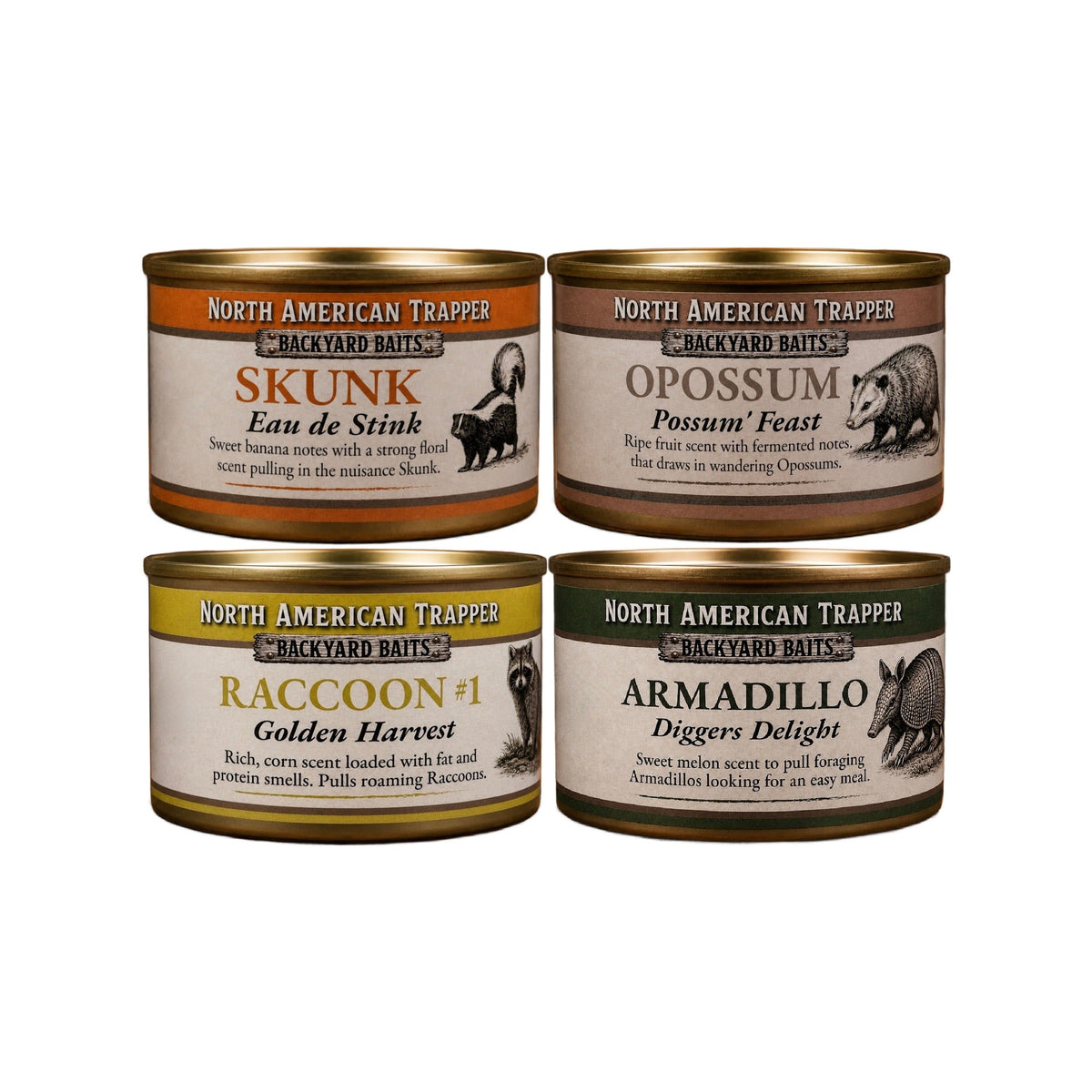
Bait Options